Dear Devorah,
I loved your advice on organizing toys—it was a game-changer! But I could really use some help with other problem areas. Books, games, and craft supplies seem to take over no matter what I do. Any tips to keep them under control?
• Overrun by Books & Bits
Dear Overrun,
I hear you! Keeping books, games, puzzles, and craft supplies organized can feel like trying to keep socks from disappearing in the laundry—no matter how hard you try, something always goes missing. A game piece here, a puzzle piece there, a marker cap that vanished into another dimension… and somehow, a book in the fridge (true story). But with the right setup, you can create a system that not only looks great but actually stays that way.
Step 1: Books—Because Finding Them Shouldn’t Be a Treasure Hunt

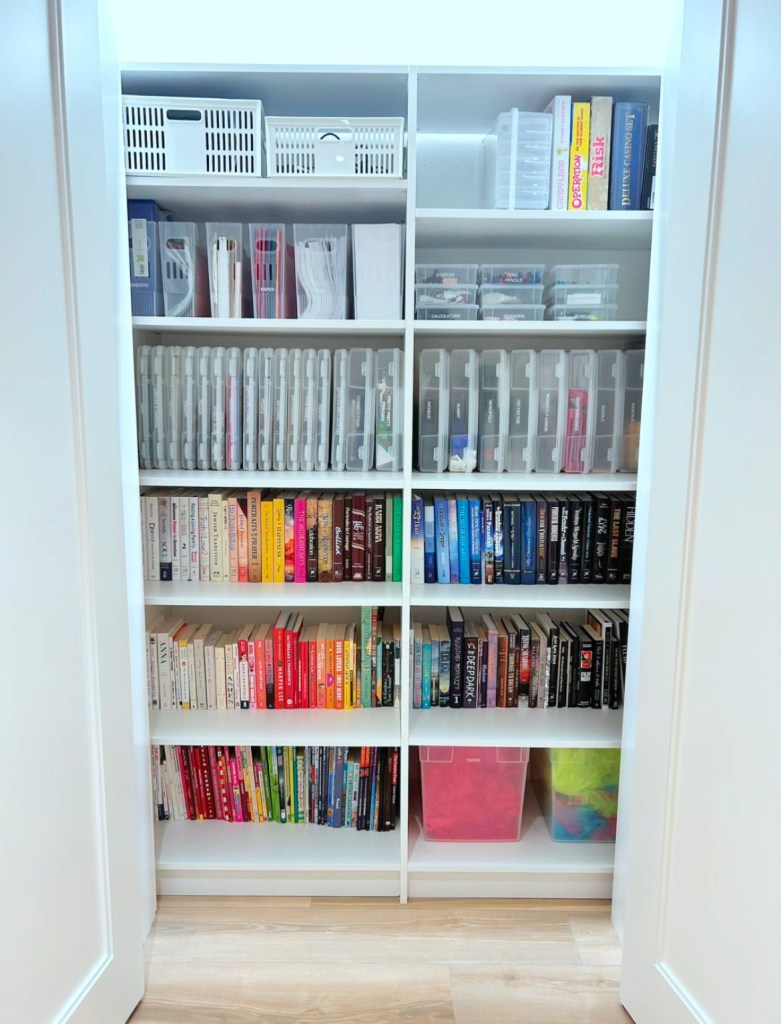
Books are fantastic—until they’re scattered everywhere except the bookshelf. The key is to give them a home that even the kids can maintain.
• Color-code for the win. Organizing books by color isn’t just for looks—it actually helps kids put them back where they belong. Think of it as a built-in sorting system. Curious George? With the yellow books. Midos Man? With the blue. Simple, eye-catching, and (hopefully) kid-proof!
• Not into color-coding? Try sorting by category—613 Torah Ave books in one section, chapter books in another. Just pick a system and stick with it (randomly shuffling books around defeats the whole purpose).
• Fix Those Well-Loved Favorites
• Once you’re doing the job, do it right! As you organize, take a quick look at your books. If it’s already a pile of loose pages, it might be time to say goodbye (or invest in a new copy). If it’s just fraying at the edges, grab some packing tape and reinforce it before it disintegrates into a bookish disaster. And for those truly treasured favorites? Transferring them to a reinforced page booklet can help them survive a few more rounds of storytime.
• Baby books need their own setup. Board books don’t always stand well on shelves. They also get lost in the shuffle when put with bigger, taller books. Instead, keep them in a bin or basket so they’re easy to grab (and easy to toss back in when cleanup time comes).
Step 2: Games & Puzzles—Because Missing Pieces = Instant Frustration
The key? Make it simple to use, quick to clean up, and, most importantly, easy to maintain. Let’s tackle this together!
Few things ruin game night faster than realizing half the Monopoly money is missing, the dice are MIA, and your 500-piece puzzle is now a 498-piece puzzle. Let’s fix that.
• Declutter first. If a game or puzzle is missing essential pieces (and you’ve already checked under the couch), it’s time to let it go. No need to keep something that can’t actually be played.
• Reinforce or replace boxes. Original game and puzzle boxes fall apart faster than your patience on a bad day. Reinforce weak corners with tape, or if you want a cleaner look, transfer games into uniform storage bins (I love the Iris game bins).
• Keep the fun factor! If switching to storage bins, cut out the front panel of the original box and tape it to the new container. That way, you still get the colorful, recognizable label (and avoid the dreaded “which one is this?” moment).
• Use zip-top bags for smaller pieces. There’s nothing worse than finally sitting down to play a game only to realize the most crucial piece is missing. Keep small parts in labeled bags inside their respective boxes or bins. This simple trick prevents them from mysteriously vanishing between play sessions.
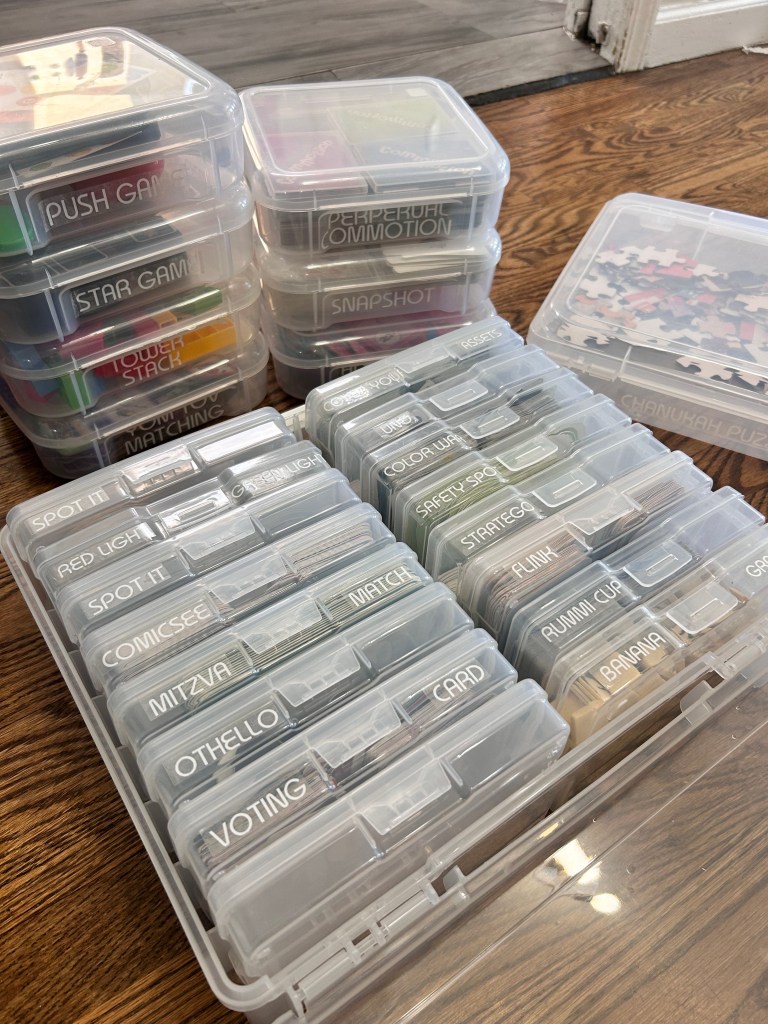
• Game card storage cases = lifesavers. These cases come with 12-16 compartments perfect for card games (Uno, Spot It, Go Fish—you name it). Bonus: Keep extra game pieces in one of the compartments. Random dice, an extra hourglass, or that one pawn you know belongs to something—this is the place for it.
• Store standing up, not stacked. Instead of piling games and puzzles into a teetering tower of doom, store them standing up like books. That way, you can grab one without the whole shelf collapsing onto your head.
• Save the instructions (because no one remembers the actual rules). If the game rules are printed on the box you’re throwing out, snap a picture and print it out. Even better? Laminate them. This avoids the classic “Wait, what happens if I land on Free Parking?” debate.
Step 3: Craft Supplies—Because Creativity Shouldn’t End in Chaos
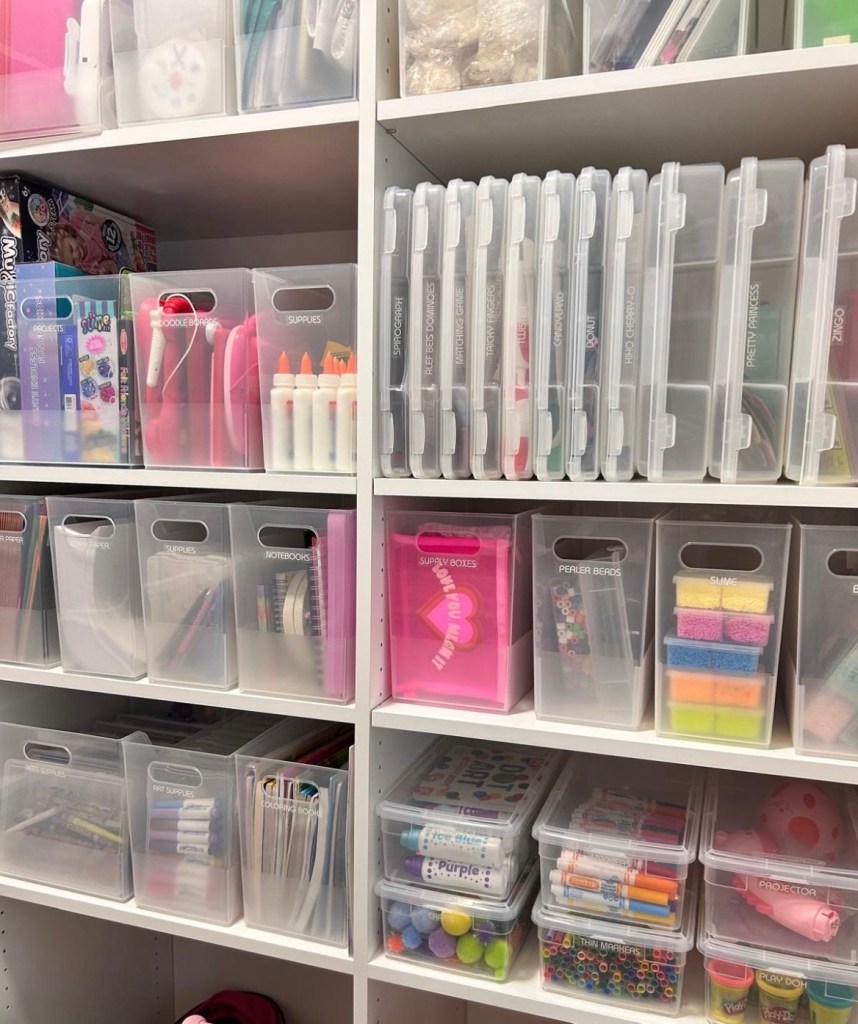
Crafting is fun, but the mess it leaves behind? Not so much. Somehow, stickers end up on the furniture, glue sticks go missing, and markers mysteriously migrate to every corner of the house. The trick? Containment, containment, containment.
• Declutter ruthlessly. Toss dried-out glue sticks, gel pens that no longer work, and markers that lost their caps and rolled under the fridge three years ago. Have your kids test the ones you’re unsure about—because honestly, no one needs 600 pens if only 10 actually write.
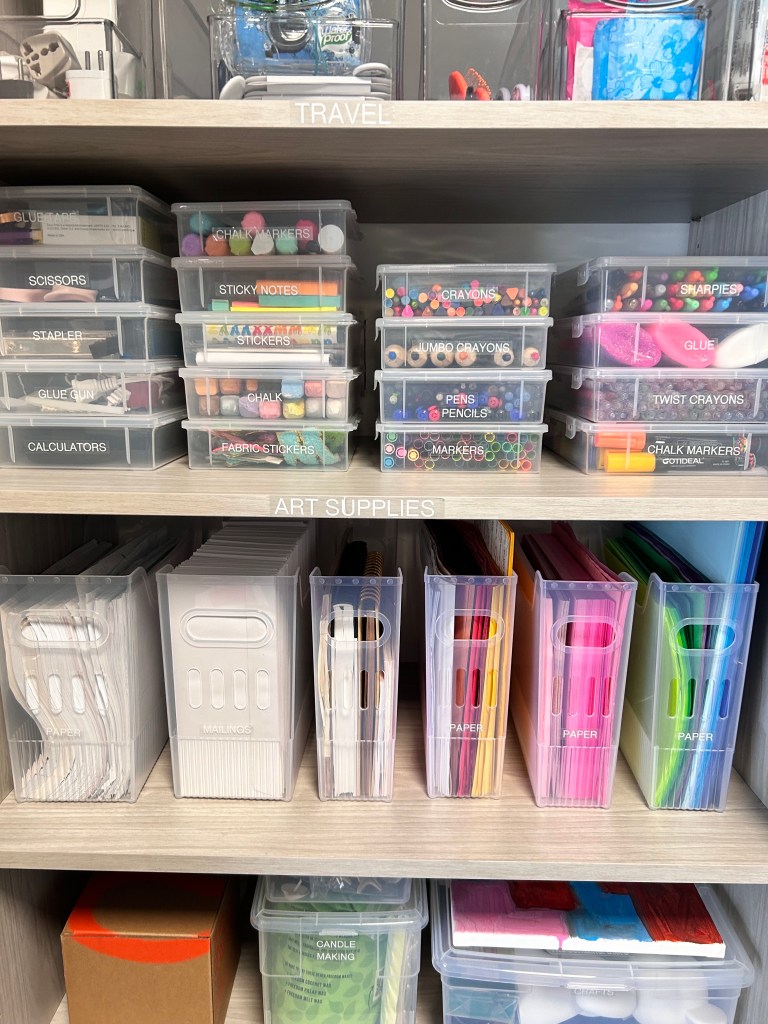
• Group similar items together. Scissors, markers, stickers—each category gets its own designated space. This makes crafting easier and prevents the endless search for a glue stick every time your kid has an art project.
• Use clear storage bins. Visibility is key—if kids can see where something belongs, they’re much more likely to put it back.
• Divide and conquer. Small drawer organizers or compartment boxes (game card organizers work great here too) are perfect for tiny items like beads, stickers, and googlyeyes. No more digging through a bottomless craft bin!
• Rotate supplies. If the craft area is overflowing, store half the supplies away and switch them out every few months. It keeps things fresh and prevents the space from getting overwhelmed.
• Keep the messier supplies on lockdown. If you don’t want glue on your walls or glitter in your carpet (no one does), store the messier supplies on a higher shelf or in or in a “parent-supervised only” bin.
Final Thoughts
The secret to an organized home isn’t just putting things in the right place—it’s creating a system that’s so simple, even your kids can follow it (most of the time). Whether you’re color-coding books, organizing games, or taming the craft chaos, a little effort upfront will save you from endless cleanup later. And who knows? Maybe next time, game night won’t start with a 20-minute search for the missing dice!
Happy Organzing,
Devorah
 The Organizer
Leave a comment