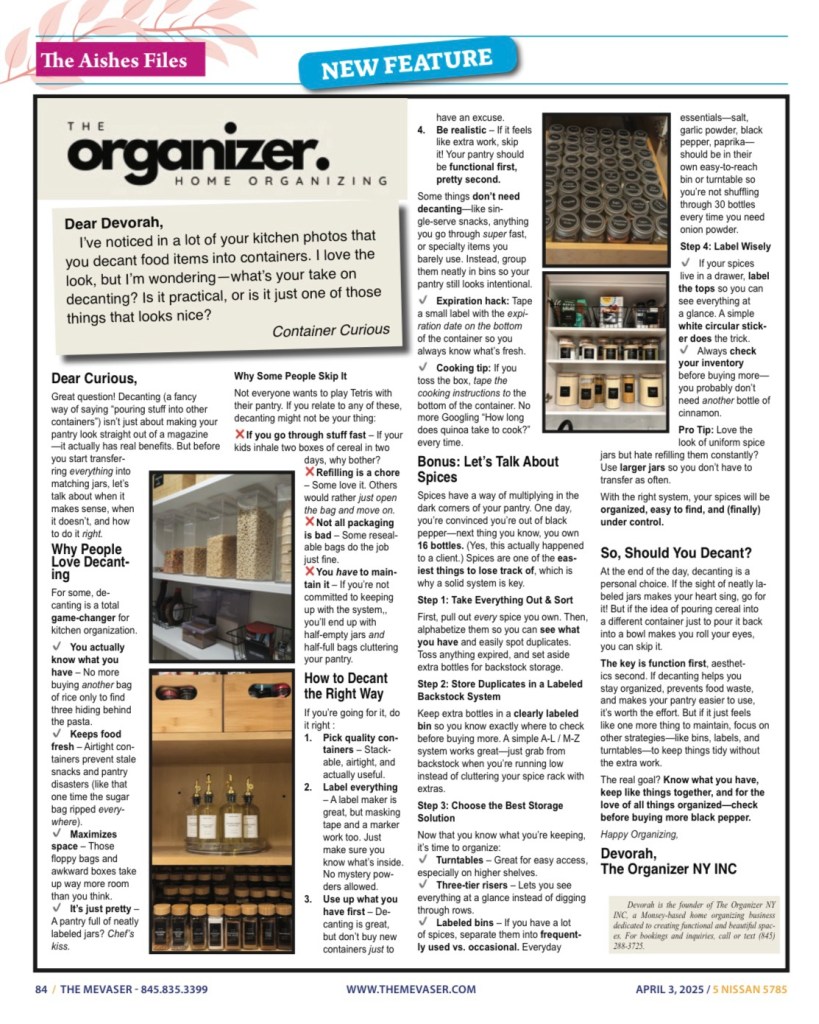
Dear Devorah,
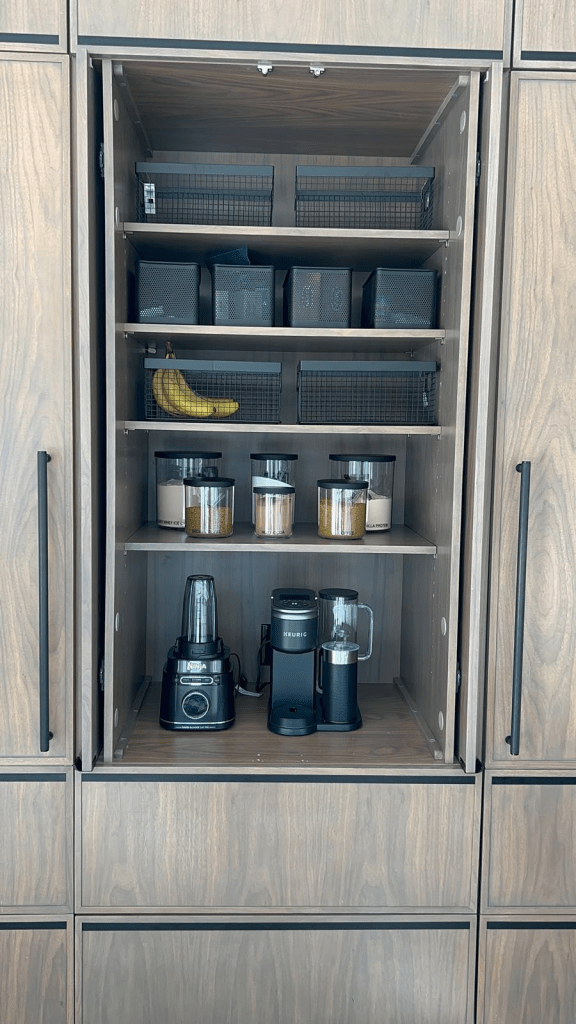
I’ve noticed in a lot of your kitchen photos that you decant food items into containers. I love the look, but I’m wondering—what’s your take on decanting? Is it practical, or is it just one of those things that looks nice?
– Container Curious
Dear Curious,
Great question! Decanting (a fancy way of saying “pouring stuff into other containers”) isn’t just about making your pantry look straight out of a magazine —it actually has real benefits. But before you start transferring everything into matching jars, let’s talk about when it makes sense, when it doesn’t, and how to do it right.
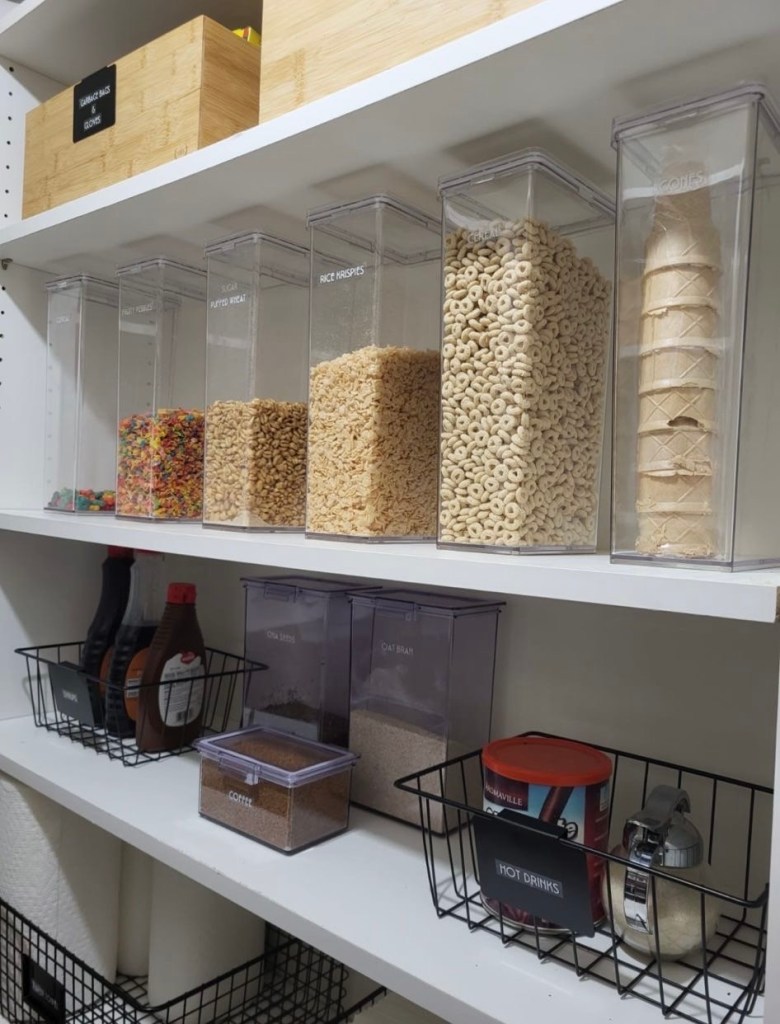
Why People Love Decanting
For some, decanting is a total game-changer for kitchen organization.
✔️ You actually know what you have – No more buying another bag of rice only to find three hiding behind the pasta.
✔️ Keeps food fresh – Airtight containers prevent stale snacks and pantry disasters (like that one time the sugar bag ripped everywhere).
✔️ Maximizes space – Those floppy bags and awkward boxes take up way more room than you think.
✔️ It’s just pretty – A pantry full of neatly labeled jars? Chef’s kiss.
Why Some People Skip It
Not everyone wants to play Tetris with their pantry. If you relate to any of these, decanting might not be your thing:
❌ If you go through stuff fast – If your kids inhale two boxes of cereal in two days, why bother?
❌ Refilling is a chore – Some love it. Others would rather just open the bag and move on.
❌ Not all packaging is bad – Some resealable bags do the job just fine.
❌ You have to maintain it – If you’re not committed to keeping up with the system,, you’ll end up with half-empty jars and half-full bags cluttering your pantry.
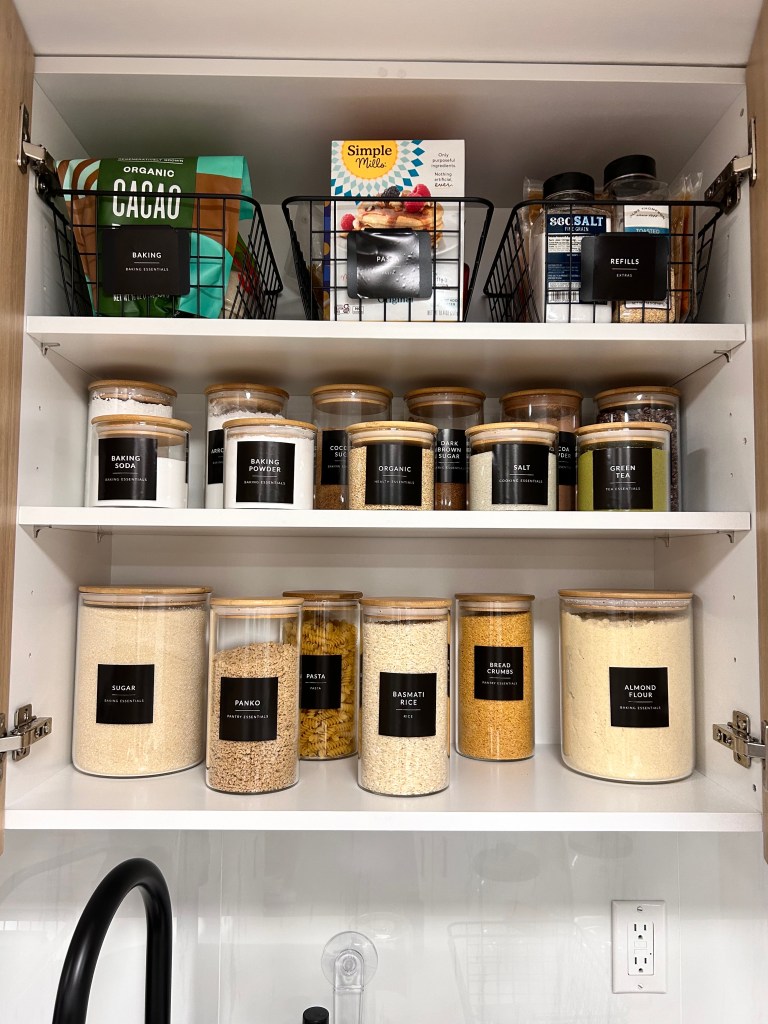
How to Decant the Right Way
If you’re going for it, do it right :
- Pick quality containers – Stackable, airtight, and actually useful.
- Label everything – A label maker is great, but masking tape and a marker work too. Just make sure you know what’s inside.No mystery powders allowed.
- Use up what you have first – Decanting is great, but don’t buy new containers just to have an excuse.
- Be realistic – If it feels like extra work, skip it! Your pantry should be functional first, pretty second.
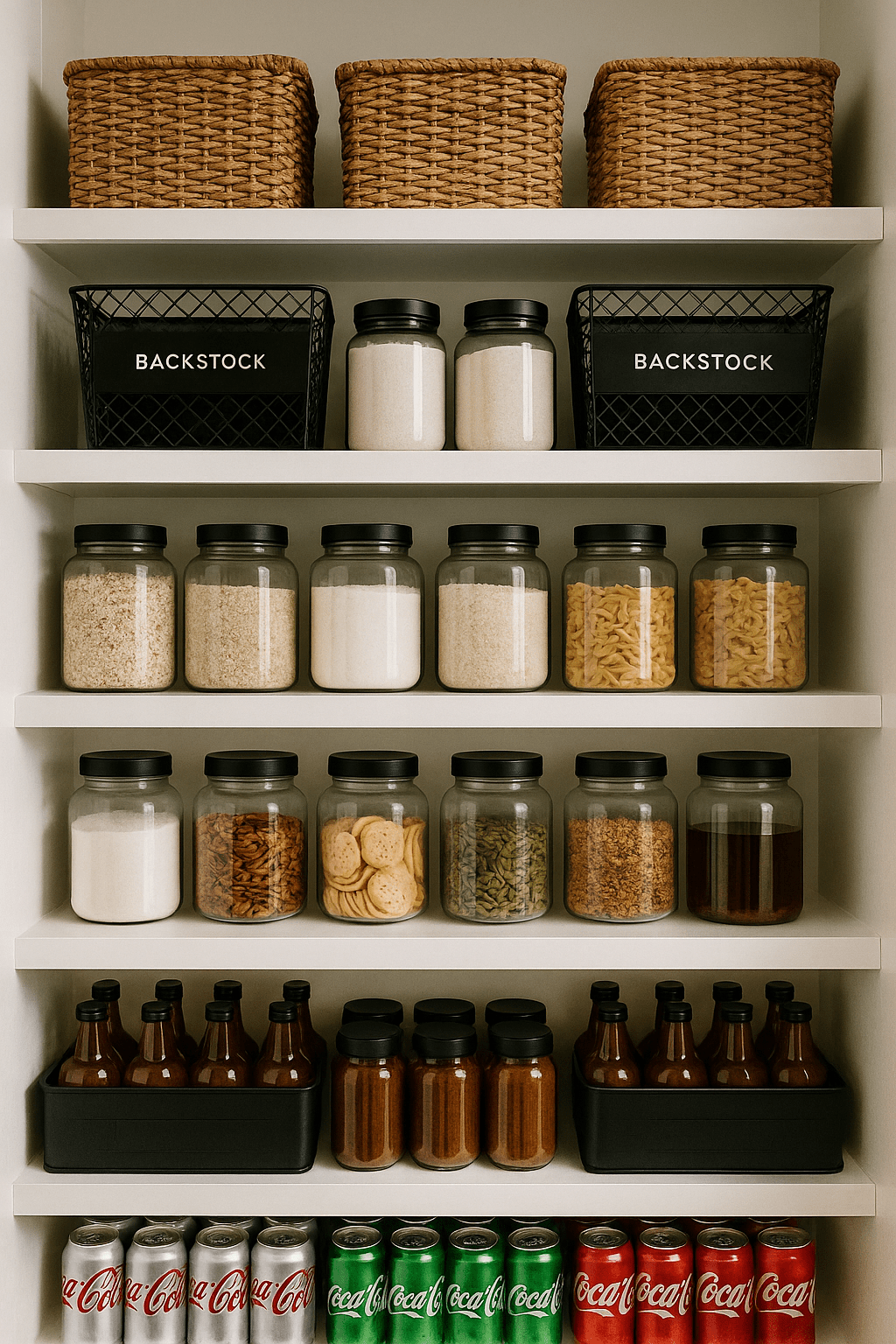
Some things don’t need decanting—like single-serve snacks, anything you go through super fast, or specialty items you barely use. Instead, group them neatly in bins so your pantry still looks intentional.
✔️ Expiration hack: Tape a small label with the expiration date on the bottom of the container so you always know what’s fresh.
✔️ Cooking tip: If you toss the box, tape the cooking instructions to the bottom of the container. No more Googling “How long does quinoa take to cook?” every time.
Bonus: Let’s Talk About Spices
Spices have a way of multiplying in the dark corners of your pantry. One day, you’re convinced you’re out of black pepper—next thing you know, you own 16 bottles. (Yes, this actually happened to a client.) Spices are one of the easiest things to lose track of, which is why a solid system is key.
Step 1: Take Everything Out & Sort
First, pull out every spice you own. Then, alphabetize them so you can see what you have and easily spot duplicates. Toss anything expired, and set aside extra bottles for backstock storage.
Step 2: Store Duplicates in a Labeled Backstock System
Keep extra bottles in a clearly labeled bin so you know exactly where to check before buying more. A simple A-L / M-Z system works great—just grab from backstock when you’re running low instead of cluttering your spice rack with extras.
Step 3: Choose the Best Storage Solution
Now that you know what you’re keeping, it’s time to organize:
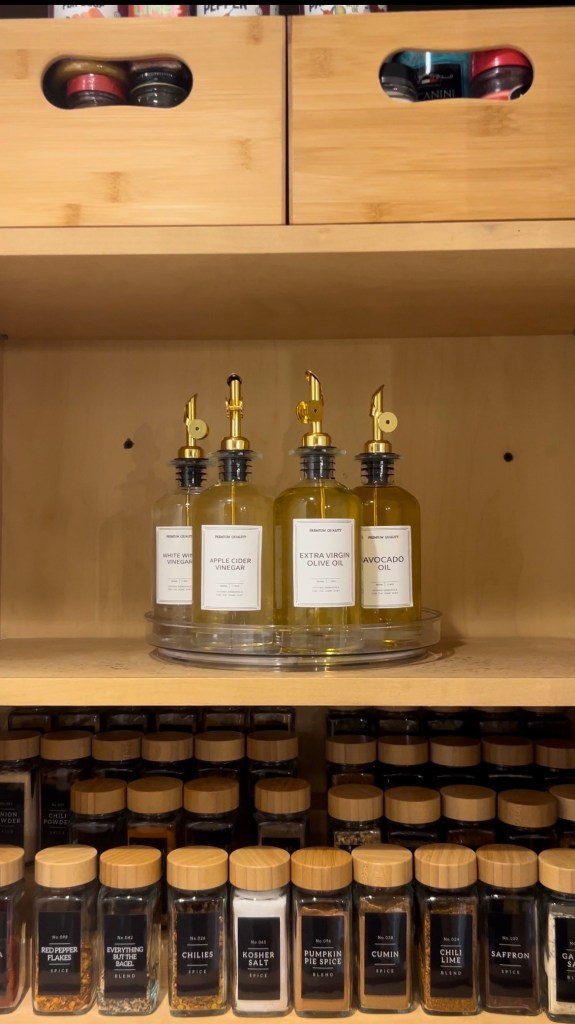
✔️ Turntables – Great for easy access, especially on higher shelves.
✔️ Three-tier risers – Lets you see everything at a glance instead of digging through rows.
✔️ Labeled bins – If you have a lot of spices, separate them into frequently used vs. occasional. Everyday essentials—salt, garlic powder, black pepper, paprika—should be in their own easy-to-reach bin or turntable so you’re not shuffling through 30 bottles every time you need onion powder.
Step 4: Label Wisely
✔️ If your spices live in a drawer, label the tops so you can see everything at a glance. A simple white circular sticker does the trick.
✔️ Always check your inventory before buying more—you probably don’t need another bottle of cinnamon.
Pro Tip: Love the look of uniform spice jars but hate refilling them constantly? Use larger jars so you don’t have to transfer as often.
With the right system, your spices will be organized, easy to find, and (finally) under control.

So, Should You Decant?
At the end of the day, decanting is a personal choice. If the sight of neatly labeled jars makes your heart sing, go for it! But if the idea of pouring cereal into a different container just to pour it back into a bowl makes you roll your eyes, you can skip it.
The key is function first, aesthetics second. If decanting helps you stay organized, prevents food waste, and makes your pantry easier to use, it’s worth the effort. But if it just feels like one more thing to maintain, focus on other strategies—like bins, labels, and turntables—to keep things tidy without the extra work.
The real goal? Know what you have, keep like things together, and for the love of all things organized—check before buying more black pepper.
Happy Organizing,
Devorah
 The Organizer