Dear Devorah,
Now that it’s summer, I finally have the headspace to deal with our medication disaster. Every time we open the cabinet, something falls out—and we still can’t find what we need.
—Struggling with Supplements
Dear Struggling ,
Welcome to summer —where the sun shines, the bugs bite, and the allergy meds vanish just when you need them most.
If your family’s medication cabinet is overflowing (or worse, scattered across five different spots), you’re not alone. Between seasonal sniffles, bug spray battles, and last winter’s half-used prescriptions, this is the time of year when most homes could use a medication refresh.
Let’s break it down into a calm, doable system—so your Claritin, Neosporin, and Band-aids are always within reach.
1. Choose One Designated Spot (And Keep It Consistent)
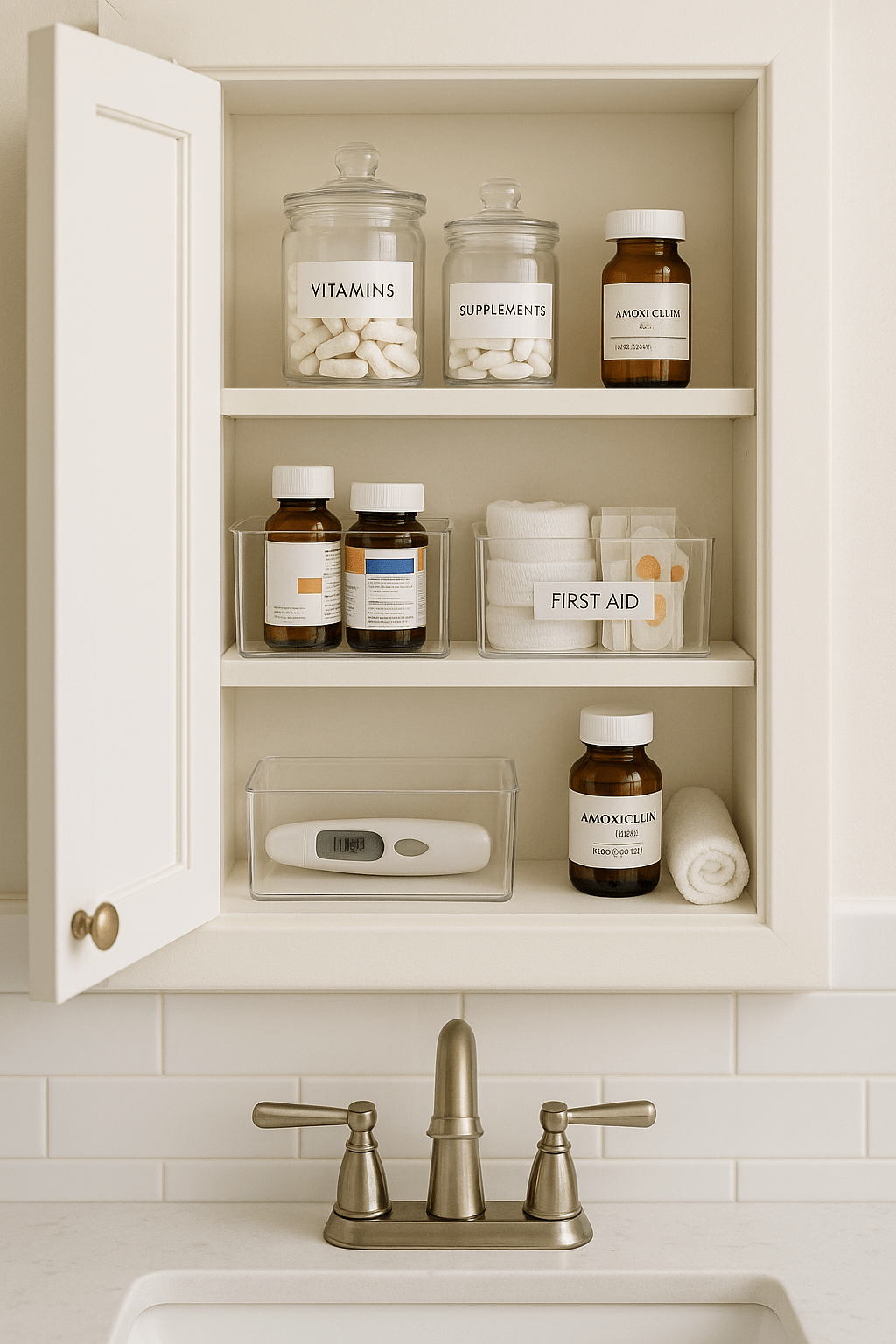
Let’s all agree on one thing: medications do not need to live in five different places. No more allergy pills in the junk drawer, cough syrup on the nightstand, and a lonely thermometer under the bathroom sink. Everything medical should have one designated home.
Ideal locations include:
• A high cabinet in the kitchen
• An upper shelf in the linen closet
• A top cabinet in the laundry room
The key is to store medications high up and out of reach. Whether you have young kids at home or not, safety always comes first—curious guests, visiting toddlers, and wandering hands can appear when you least expect it. Even everyday over-the-counter items can be dangerous in the wrong hands.
If your storage space needs to be lower down, use locking bins or add childproof latches to keep everything secure.
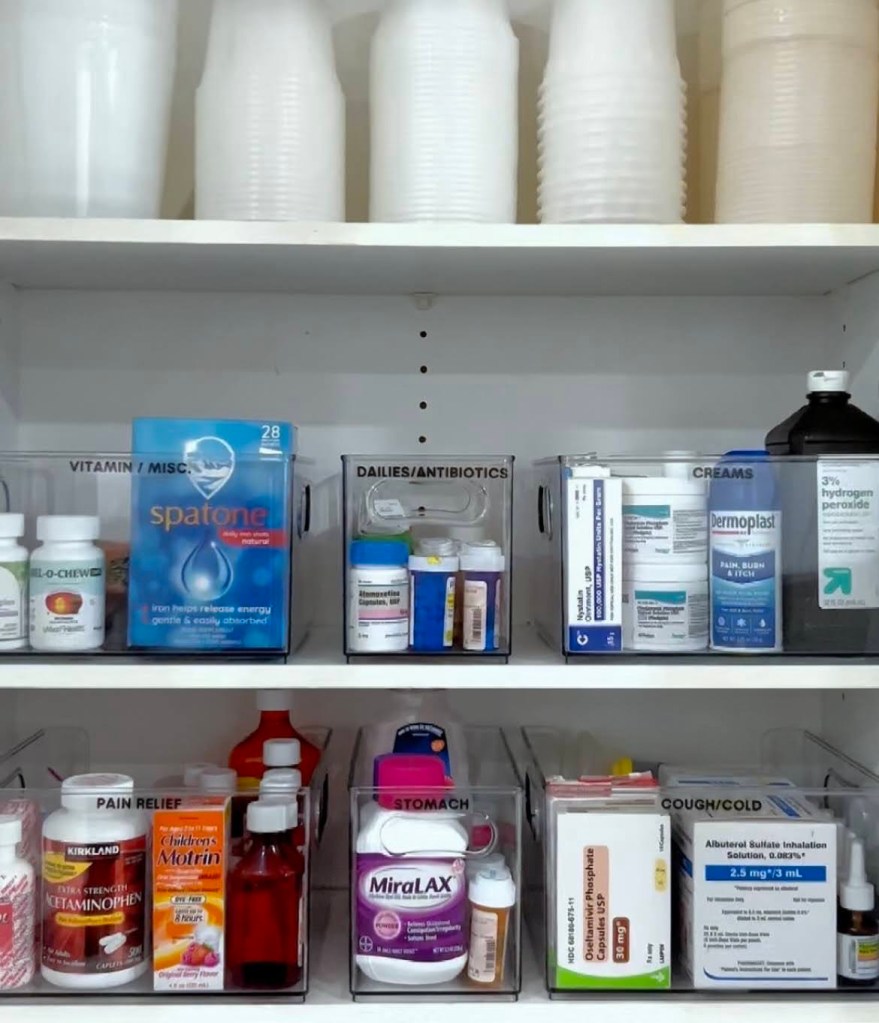
2. Sort by Category, Then Sub-Categorize as Needed
Once everything is in one place, it’s time to sort. Group items by broad, functional categories. It makes the system intuitive and keeps you from buying your third bottle of Motrin “just in case.”
Start with the basics:
• Pain relief – Tylenol, Advil, Motrin
• Wound care / first aid – Bandages, gauze, alcohol wipes
• Creams and ointments – Anti-itch, muscle rub, antibacterial ointments
• Cold, flu, and allergy – Cough drops, decongestants, nasal spray
• Vitamins and supplements
From there, sub-categorize if needed. You might create a baby box with infant meds or divide your creams by use—like itch vs. antibacterial.
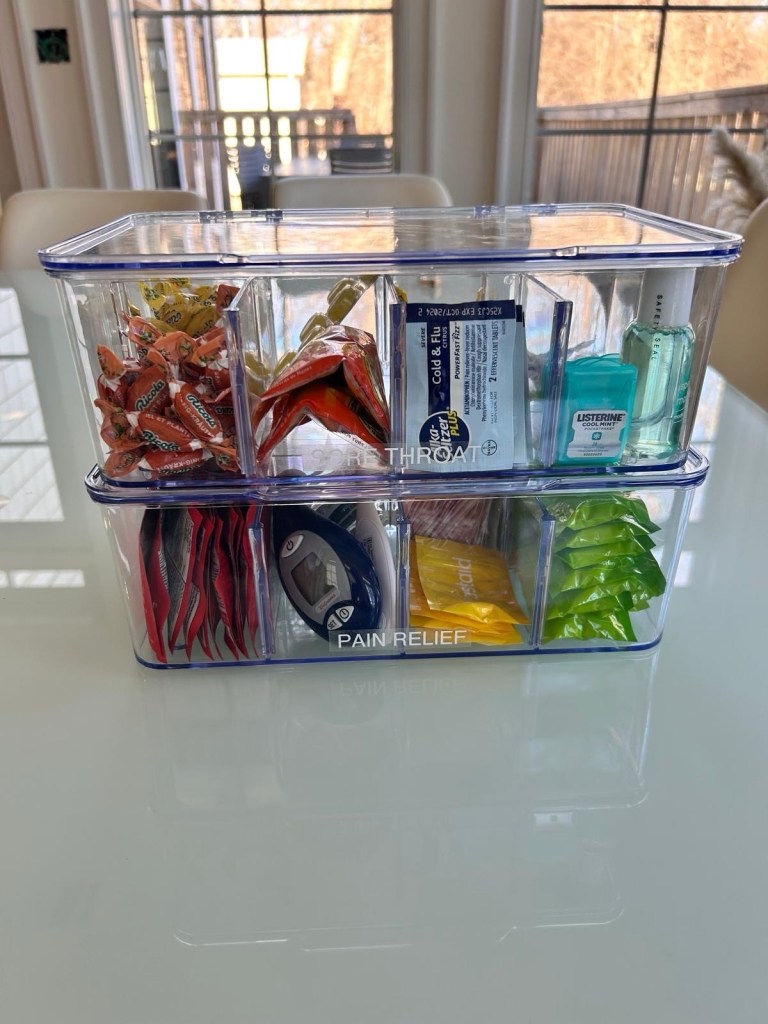
The goal is to keep everything grouped and labeled—so you’re not tearing apart the cabinet at 3 a.m., half-asleep, whisper-yelling “where’s the thermometer?!” while the baby sniffs dramatically in the background.

3. Set Aside a Section for Everyday Use
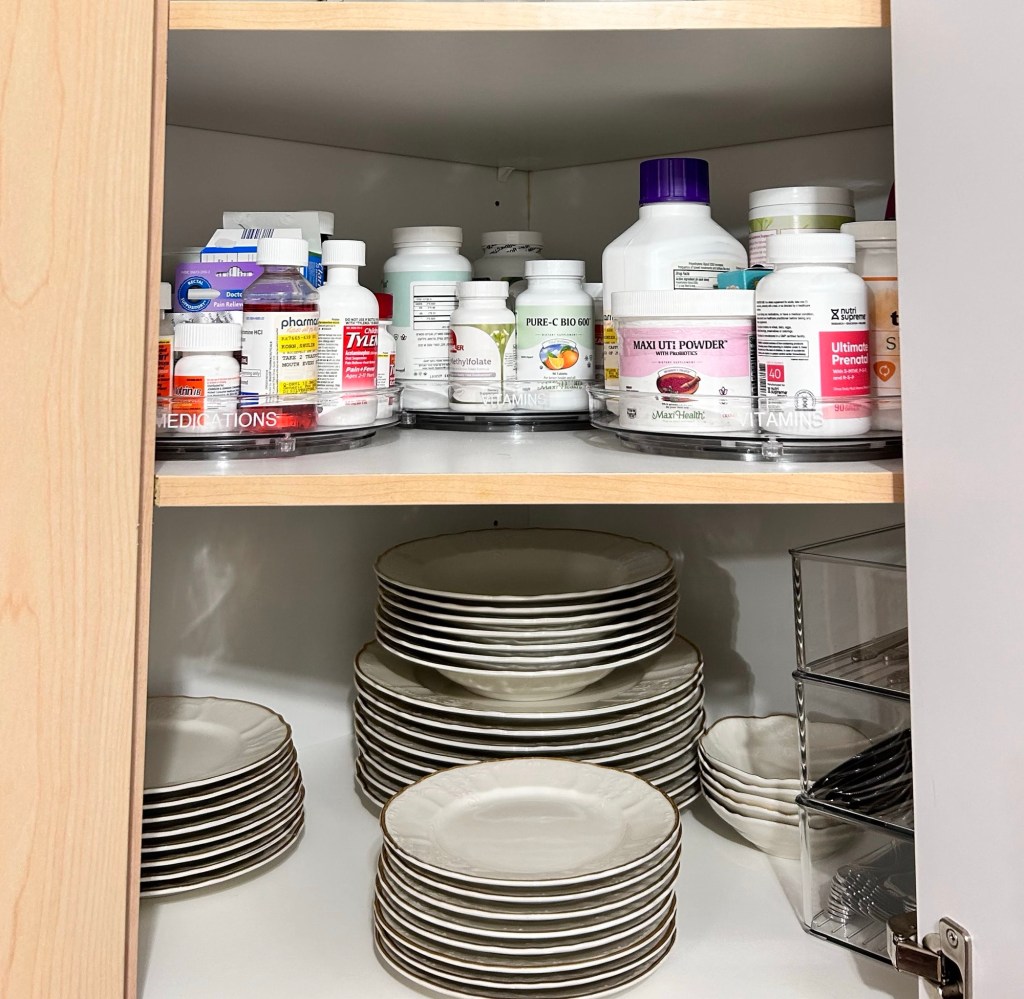
Daily medications, prescriptions, and supplements should never be buried behind half-used cough syrup from 2019. If you use something every day, it deserves a front-row seat.
Think about your household’s rhythm:
• Morning vitamins
• Evening melatonin
• Allergy meds
• Ongoing prescriptions
Use a labeled bin or turntable to keep these items accessible. That way, you’re not flipping through burn cream looking for Claritin while the bus is honking outside.
4. Give Each Person Their Own Area—When It Makes Sense
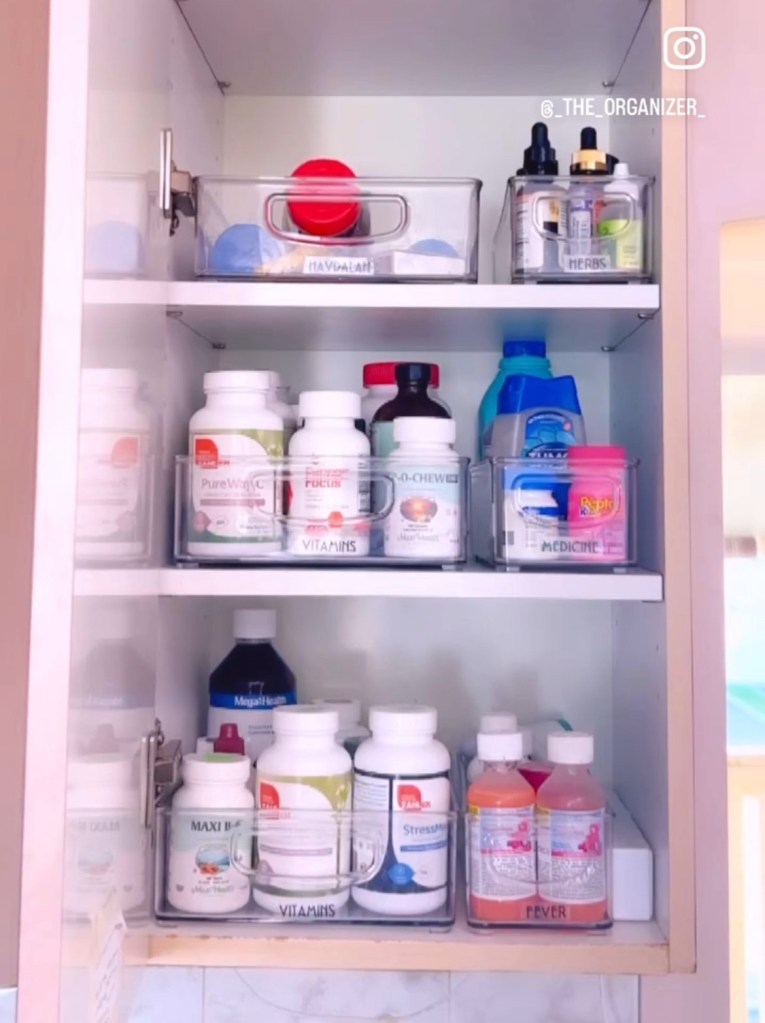
When a bunch of people in the same family are on multiple medications, one daily-use bin can easily turn into a chaotic free-for-all. A simple fix? Give each person their own setup. That could mean a personal bin, pouches tucked into a larger bin, or whatever system makes it easy to grab what they need without digging through everyone else’s stuff.
Clear zippered pouches are a solid go-to—just choose ones that are a bit sturdier so they hold up over time. Makeup or toiletry bags are another favorite. I recommend ones with a wipeable lining, since spills definitely happen. What’s nice about these is that they offer a bit of privacy, which can be especially helpful for teens or anyone who prefers to keep their medications discreet.
These pouches are also perfect for grab-and-go moments. Heading out for Shabbos? Need meds in your work bag? It’s all in one spot and ready to toss in.
Label everything clearly—whether it’s individual bins, pouches, or each family member’s personal case. In the past, I’ve added little keychains with names to the zippers to help everyone tell theirs apart. I’ve also suggested using different patterned cosmetic cases to keep things fun, functional, and easy to recognize. And let’s be real—when the bags are cute, even medication feels a little more exciting.
Depending on how medications are taken, it might make sense to keep these pouches in individual bedrooms or bathrooms. Just make sure that wherever they’re stored, they’re safely out of reach of little hands, clearly labeled, and organized in a way that works for the space.
5. Use Organizing Tools That Make Sense for Your Space
This isn’t about perfection—it’s about function. Choose tools that make things easy to reach, easy to restock, and easy to maintain.
Turntables are great for everyday access. One spin and you’re looking at everything—no more digging around for that one tiny bottle that always hides in the back.
Lidded stackable bins are useful for keeping categories separated while making the most of vertical space. They contain loose items, prevent pileups, and help you quickly see what needs to be restocked. Label the front and stack based on frequency of use.
Mini plastic drawers are a beautiful and practical option. They come in a wide range of sizes and styles, so you can find something that fits your space perfectly. What’s especially nice about drawers is that you can stack them to take advantage of vertical space, but still pull each one out easily without unstacking everything. It’s a smart solution that makes staying organized feel effortless—and turns a boring cabinet into something just a little more chic.
6. Be Realistic About Expired Medications
Here’s the thing: expired meds either don’t work as well, don’t work at all, or start doing weird chemistry things you didn’t sign up for.
Use your judgment. If something smells off, if pills are crumbling, if the label is unreadable—toss it.
And it’s not just pills—creams, sprays, and even sunscreen expire too. My friend learned that the hard way after getting badly sunburned, then flipping over the bottle and realizing it had expired sometime last decade. Lesson learned.
No need to obsess, but a seasonal sweep—especially before allergy season or summer—can keep things current, safe, and frustration-free.
Final Thought
You don’t need a perfect medicine cabinet—just a system that works for real life. One home for everything, clear categories, a spot for daily meds, and labels that make things easy. Because when life gets loud, no one wants to be shouting “Where’s the Band-Aid?!” while your two-year-old is having a full meltdown over a paper cut.
It’s not about perfection. It’s about less stress, every day.
Happy Organzing,
Devorah
 The Organizer
Leave a comment