Dear Devorah,
Do you have advice on packing for camp that doesn’t end with me crying into a laundry bag?
—Mid-Packing Meltdown
Dear Meltdown,
Yess! Let’s keep the stress low and save the tears for the goodbye hug, not the packing process.
Sleepaway camp is one of the best experiences you can give your child—but packing for it? Not exactly peaceful. Between the endless lists, growing piles on every surface, and the sudden panic over whether anyone owns enough socks, it can feel like a full-time job.
The good news? With a little planning, a lot of Ziplocs, and a handful of Sharpies, it really can be calm, clear—and maybe even a little fun.
Let’s walk through it together.
Step 1: Prep Like a Pro
Start Early
The best packing advice? Start early. No—earlier than that. Give yourself a good week or two so you’re not stuck scrambling through half-empty shelves, grabbing whatever’s left in the store the day before the bus leaves.
Take Inventory
Go through the camp list and take a real inventory of what you already have. Open drawers, check closets, and see what’s actually there. More often than not, those 12 socks you thought you had? Three belong to your 4-year-old, four have holes, and suddenly you’re down to five usable pairs.
Once you know what you have, make two master lists: one for what still needs to be packed, and one for what still needs to be bought.
Pick a Prep Spot
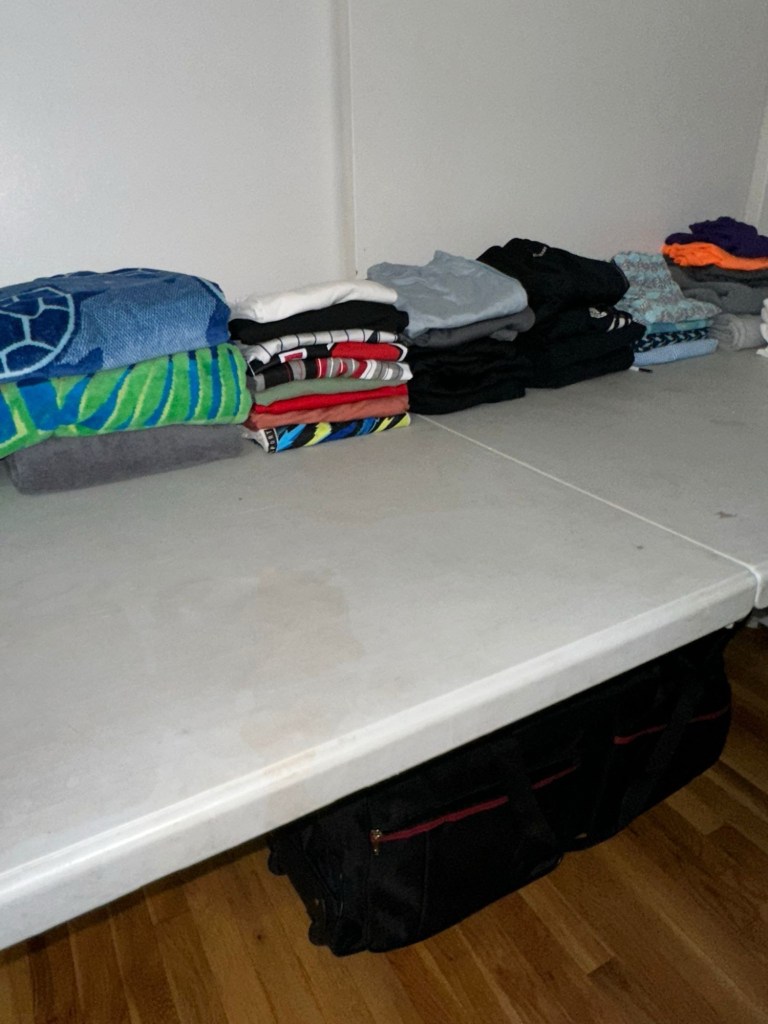
Now give yourself a central place to work. Set up a designated packing zone: a guest bed, a folding table, the corner of your garage—even a laundry basket labeled “Camp.” This becomes your prep station where everything gets piled, sorted, and organized. Keeping it all in one place makes the whole process feel more manageable—and much less likely to take over your dining room.
Pack Backwards (Yes, Really)
One of the biggest rookie mistakes? Packing too early—and realizing your kid has nothing left to wear the week before camp. Pack backwards. Start with what they won’t need right away, and leave out enough outfits to get through the final days before departure. Don’t forget to set aside their first-day outfit so it doesn’t get buried under two weeks’ worth of labeled t-shirts and shampoo bottles.

Step 2: Contain the Chaos
Let’s be honest: once the bag opens at camp, it’s every shirt for itself. Pack smart so your kid’s stuff actually has a fighting chance.
Pack It Right
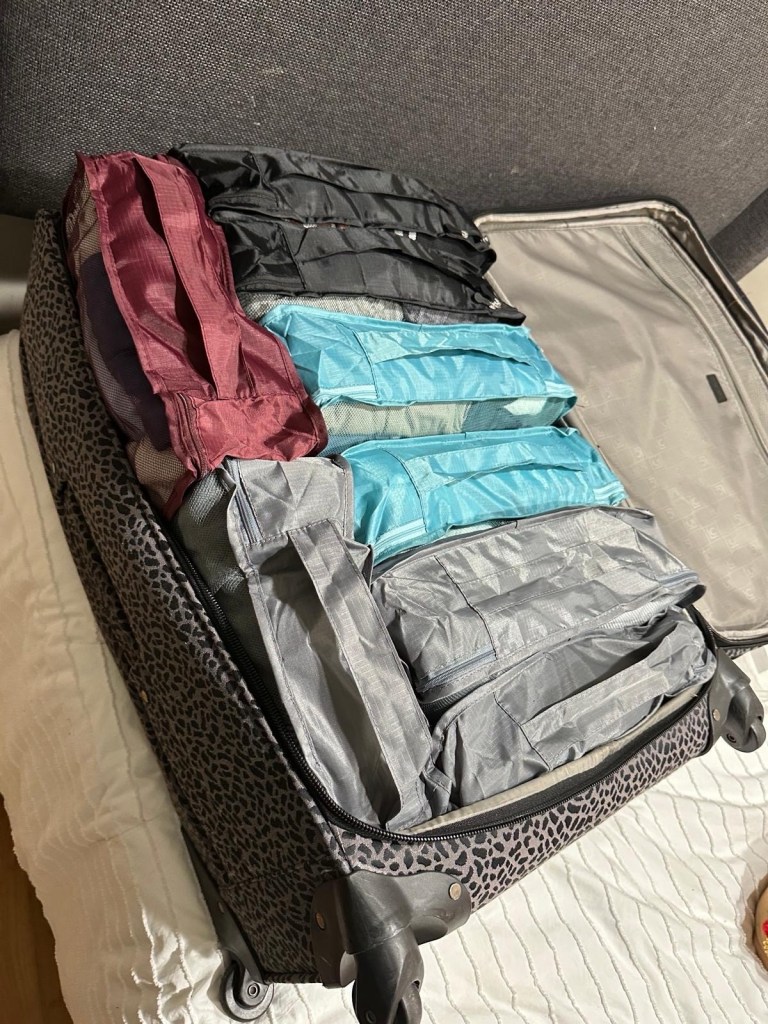
Let’s start with the bag. Soft duffel bags are the gold standard: they’re roomy, flexible, and fit way more than you’d expect—especially if you roll, not fold. Rolling saves space, reduces wrinkles, and makes it easier for your child to pull out what they need without turning their bunk into a laundry explosion.
Bins, Drawers, and a Whole Lot of Ziplocs
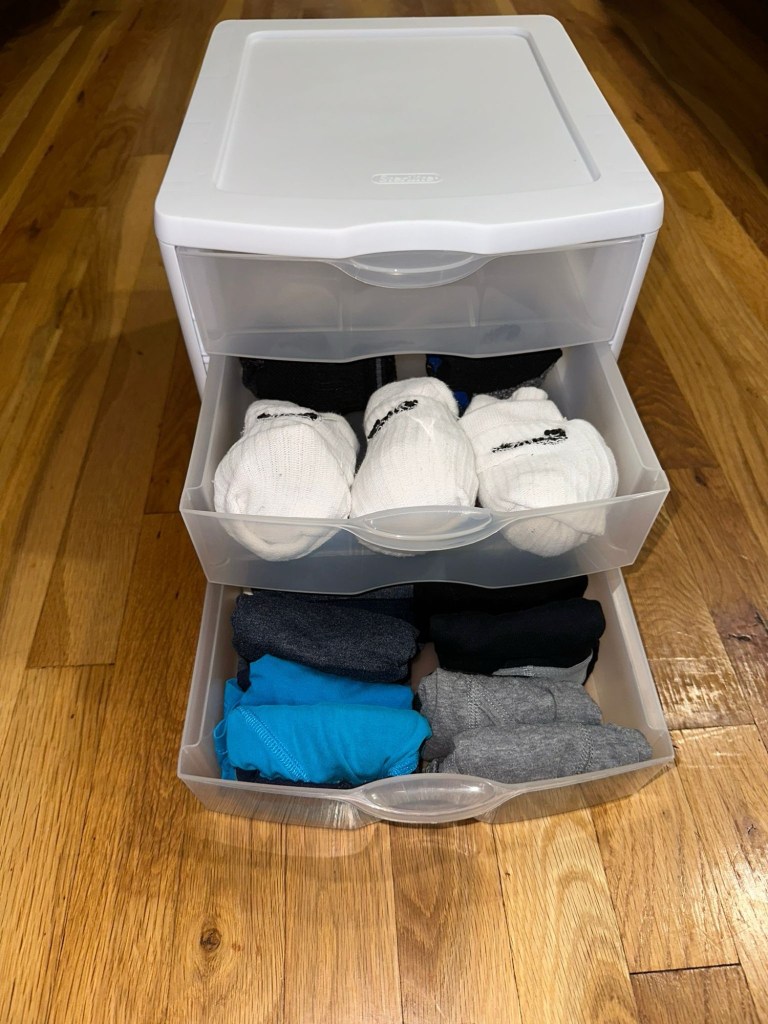
Sending bins or plastic drawers? Amazing. Even better—pack directly into them. That way, your child shows up basically unpacked.
To keep everything secure during travel, wrap the drawers in Saran Wrap or tape them shut with duct tape. Just make sure they actually fit the bunk layout. Stackable drawers are usually your best bet—they can stand upright, sit side by side, or slide under the bed. Keep in mind, many girls prefer opaque drawers instead of clear ones so their things aren’t on display in a shared space.
When it comes to organizing the rest? Ziplocs are your secret weapon. Gallon-size, Challah-size—use them for socks, underwear, pajamas, toiletries… anything you want to keep contained, separated, and easy to find.
Label Everything
If it’s not labeled, assume it’s not coming home. Towels, socks, flashlights—even the toothpaste cap. (Don’t laugh—it’s happened.)
The good news? Labeling doesn’t have to mean dragging out a steamer and burning your fingers on iron-ons at midnight. Stick with laundry-safe sticker labels, clothing stamps, or a Sharpie that hasn’t gone missing. Just keep it simple: use your last name and a phone number instead of a full name. That way, the label works for siblings, hand-me-downs, and anything that wanders off has a shot at finding its way back home.
Step 3: Get Them Involved
Even if your child isn’t the world’s most helpful folder, have them pack with you. Let them see what’s going into the bag, help group items by category, or stick their own labels onto shirts and towels. The goal isn’t for them to pack everything—it’s to help them feel involved and prepared.
When kids take part in packing, it changes things. They know what they have, where it is, and what it’s for. It gives them a sense of ownership—and just enough responsibility to (hopefully) recognize their own stuff before it ends up in the lost and found.
Step 4: Add a Little Love
Between the checklists, the labeling, and trying to track down the batteries, it’s easy to forget the little things—but those are often what your child remembers most.
Before you zip up the bag, tuck in a quick note at the top. Something simple, silly, or sweet:
• “You’re going to have the best summer.”
• “So proud of you—can’t wait to hear all about it.”
• “P.S. Please remember to brush your teeth.”
Even the most independent camper appreciates a small reminder that someone’s thinking of them. On that first day, when everything is new and a little overwhelming, it can mean the world.
Final Thoughts
Packing for camp is part organizing, part parenting, and part letting go. But with a little strategy and a system that works for you and your child, it doesn’t have to be chaotic.
So yes—start early. Roll the clothes. Use the Ziplocs. Duct tape the drawers. Stamp the socks. Let them help. And then take a deep breath, hug them goodbye, and remind yourself: this is what all the prep was for.
You’ve done your part. Now it’s their turn—to grow, thrive, and hopefully bring home at least half their stuff.
Happy Organizing,
Devorah
 The Organizer
Leave a comment