Dear Devorah,
I’m already bracing myself for the flood of papers my kids are about to bring home. I really don’t want to spend the whole summer with it all piling up. Any advice on how to stay ahead of it?
– Already Overwhelmed
Dear Overwhelmed,
As the school year winds down, the excitement builds—no more homework, no more carpools, no more packing lunches. But as those final days hit, so does the avalanche… not of snow, but of paper.
Art projects. Spelling tests. Reading logs. Class newsletters from March. And yes, somewhere in the bottom of the backpack, a crumpled, rotting apple that’s been quietly fermenting since Parshas Ki Sisa.
And you’re standing there wondering:
What am I supposed to do with all of this?
Here’s the short answer: Tackle it now, not later.
Here’s the long answer: keep reading.
We’re going to walk through exactly how to handle the paper pile-up, what’s worth keeping, what can go straight to recycling, and how to set up a system that won’t end in a family meltdown -yours or theirs.
Step 1: Do It Now—Not in September
Let’s not pretend you’re going to circle back to this in August. If you leave that backpack sitting in the corner “for later,” it’ll still be there when school starts again—only by then, it’ll be full of mystery crumbs, crumpled tests, and something vaguely sticky that you do not want to identify.
So here’s the rule: don’t wait. Just do it now.
Pick a night, dump the whole thing out on the table, and get to it. It might feel overwhelming, but the truth is—it goes fast once you start. Most of the papers will be easy yes-or-no decisions. Half an hour, maybe forty minutes, and you’re done.
And the bonus? You’ll kick off summer with a clean slate—no paper piles, no mystery folders, and no lingering spelling tests from six months ago. Just clear counters, empty backpacks, and some well-earned peace of mind.
Step 2: Know Who You’re Dealing With
Before you start sorting, take a quick pause: Who’s the sentimental one—you or your kids? That answer will shape how this goes.
If It’s Your Kid…
Some kids get attached to every last paper—and honestly, who can blame them? They’ve poured a whole year into learning, creating, and growing. That lopsided menorah made of cotton balls? To you it’s a craft. To them, it’s an accomplishment. They see it and think, I did that. And they’re right.
If your child is especially emotional about their schoolwork, it’s okay to do the bulk of the sorting while they’re not home. This isn’t sneaky—it’s survival. It is much easier to recycle 42 coloring pages when no one is crying over them.
Save a few special things you know they’ll appreciate later, and gently let the rest go.
If It’s You…
Sometimes it’s the parent who’s attached. You open a folder, see a backwards “E” and a gold star, and suddenly you’re feeling nostalgic about kindergarten like it was a decade ago.
That’s normal. These little papers really do show growth—new handwriting, better drawings, a story that actually has a middle and an end.
So give yourself permission to feel sentimental, but also permission to let go. You’re not throwing away their childhood. You’re making space to appreciate it better. You’ll actually enjoy the saved pieces more when they’re part of a curated collection, not buried in a bin of forgotten worksheets and dried-out glue sticks.
Not sure what to save? Try asking your child. This is a great time to include them in the process. Not for every step, but especially when you’re stuck on the maybe pile.
You might be surprised how quickly they’re willing to let go of things you thought were special—and how clearly they know which pieces really matter to them.
If It’s Your Teen…
Let’s be real: most teenagers want nothing to do with this process. They don’t want to talk about school, look at school, or even hear you say the word “school” until at least mid-August. If they had it their way, they’d toss the whole backpack into a bonfire and never speak of it again (I may or may not be speaking from experience).
If this is your teen, check in with them first. Just ask, “Is there anything you want me to save?” If they shrug and walk away, congratulations—your job just got easier.
But if you’ve got a sentimental teen—the kind who saves every paper “just in case”—you may want to block off time to go through it together. Keep it casual. No lectures, no drama. Let them flip through and decide what matters, and gently help them part with the extras.
Remind them: they’ll actually enjoy the saved pieces more when they’re kept in a neat, intentional collection—not shoved into a shopping bag in the back of a closet for the next six years.
Step 3: Sort It – Toss or Keep
Ready to jump in? Start with two simple piles: Toss and Keep. No need to overthink it—just begin.
TOSS
Go ahead and toss:
● Worksheets, drills, and reading logs
● Newsletters, old forms, and flyers
● Quick crafts or anything crumpled and stained
If it doesn’t make you smile or pause, it probably doesn’t need to stay.
KEEP
Save things like:
● Photos of your child
● Report cards and teacher notes
● Awards or anything they were proud of
● Original writing and meaningful artwork
If it tells a story about the year, keep it. If it feels like clutter, let it go.
Step 4: Store and Label
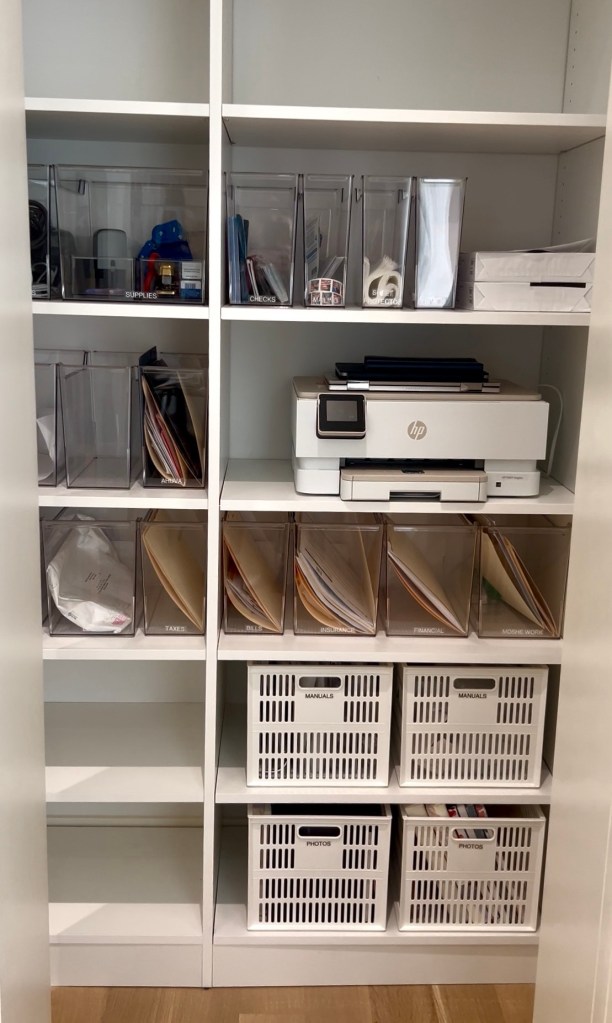
Now that you’ve decided what to keep, give it a proper home. You have a few great options:
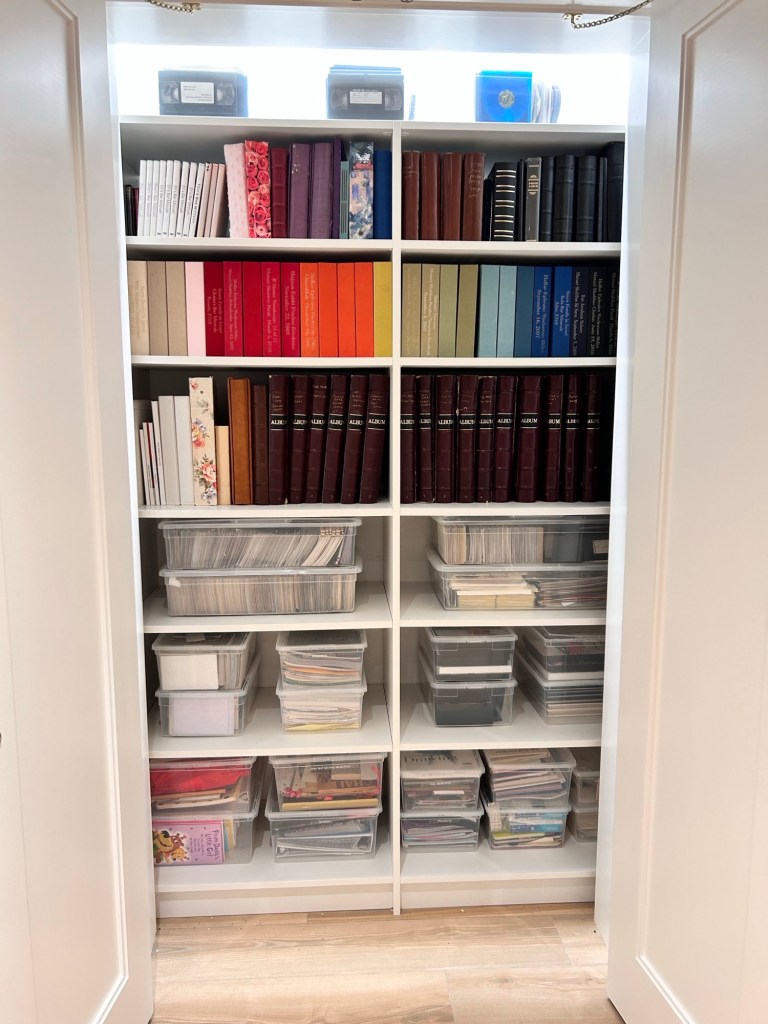
● Memory Box: Use one box per child. Inside, group items by grade—clip them together or use large envelopes to keep things tidy. This is perfect for saving physical items like art projects or larger papers.
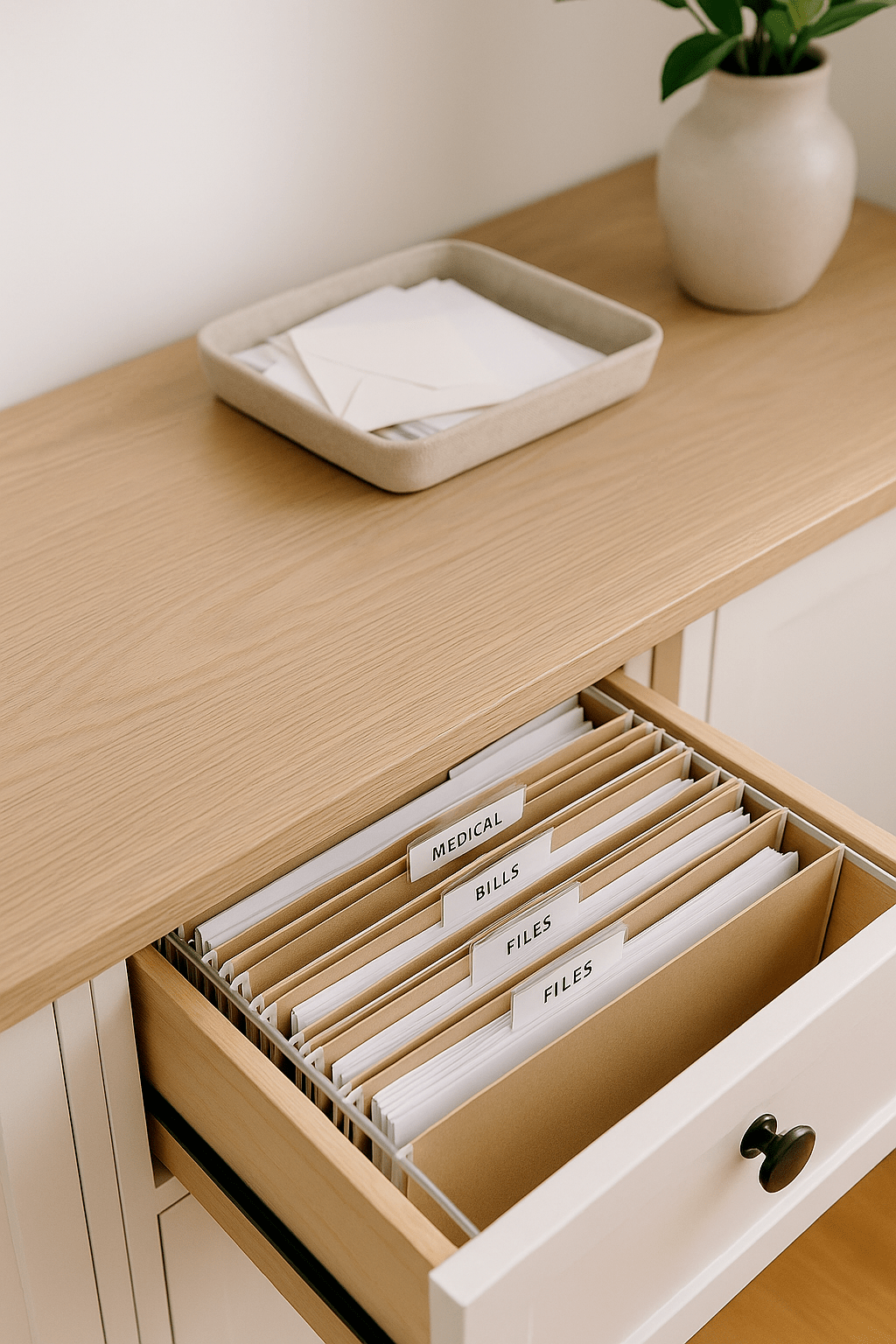
● File System: Use a file box and give each child their own main folder. Inside that folder, create subcategories by grade or year (e.g., “1st Grade,” “2nd Grade,” “3rd Grade”) so everything stays organized and easy to browse.
● Go Digital: Take photos of your child’s artwork or schoolwork and upload them to a digital frame or create a photo book. It’s a beautiful way to enjoy the memories without having to store every physical piece.
Whichever method you choose, make sure it’s easy to identify each child’s work—whether that’s a label on a folder or a title in a photo album. Include the child’s name, grade, and school year—like: “Ezra – 3rd Grade – 2004–2005.”
And just like that—it’s organized, clearly labeled, and easy to revisit without the mess.
Final Thoughts
Make it easy on yourself: turn on some music, grab a garbage bag, and get it done—on your own or with the kids. And those memory boxes or folders? They’re not just for storage. They’re fun to pull out on a long Shabbos afternoon when your kids feel like reminiscing or laughing at how they used to spell “elephant.”
Happy Organizing,
Devorah
 The Organizer
Leave a comment