Dear Devorah,
Every time I prep for Shabbos, my cabinets explode—paper goods, platters, tablecloths… total chaos. With all the guests and gear, how do I keep it together?
-Overwhelmed Entertainer
Dear Overwhelmed,
Now that summer is officially here, so is prime hosting season. Between long Shabbos afternoons and an endless rotation of guests, this is when your home gets put to the test. Whether you’re hosting every week or just once in a while, you want it to feel calm, smooth, and welcoming.
But with folding chairs in the hallway, trays stacked on the counter, and that cabinet of paper goods ready to burst, Shabbos prep can start to feel more chaotic than peaceful
The good news? You don’t need a second kitchen or a walk-in pantry. Just a few simple systems that make it easy to find what you need, easy to put it away, and easy to reset between meals.
Here’s how to store your Shabbos and hosting essentials without losing your mind—or your salad bowls.
Stop the Paper Goods Chaos
One thing I always find when organizing a kitchen? That awkward stash of paper goods—five plates from one set, four cups from another, and no matching napkins in sight.
This is where a little paper goods strategy goes a long way.
Here’s what I recommend:
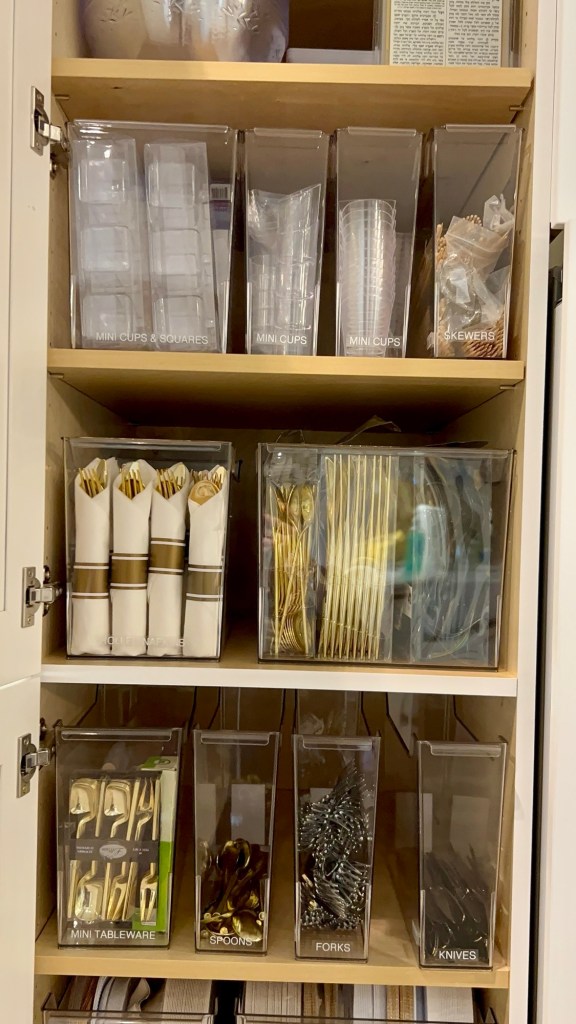
● Pick 2–3 coordinated sets per season—think styles or colors that mix and match easily. You don’t have to go full minimalist, but aim for flexibility. Floral napkins, seasonal hues, or themed prints are all fair game—as long as they work well together. That way, even if you mix pieces from different sets, it still looks intentional and you’re not stuck with mismatched leftovers you’ll never use.
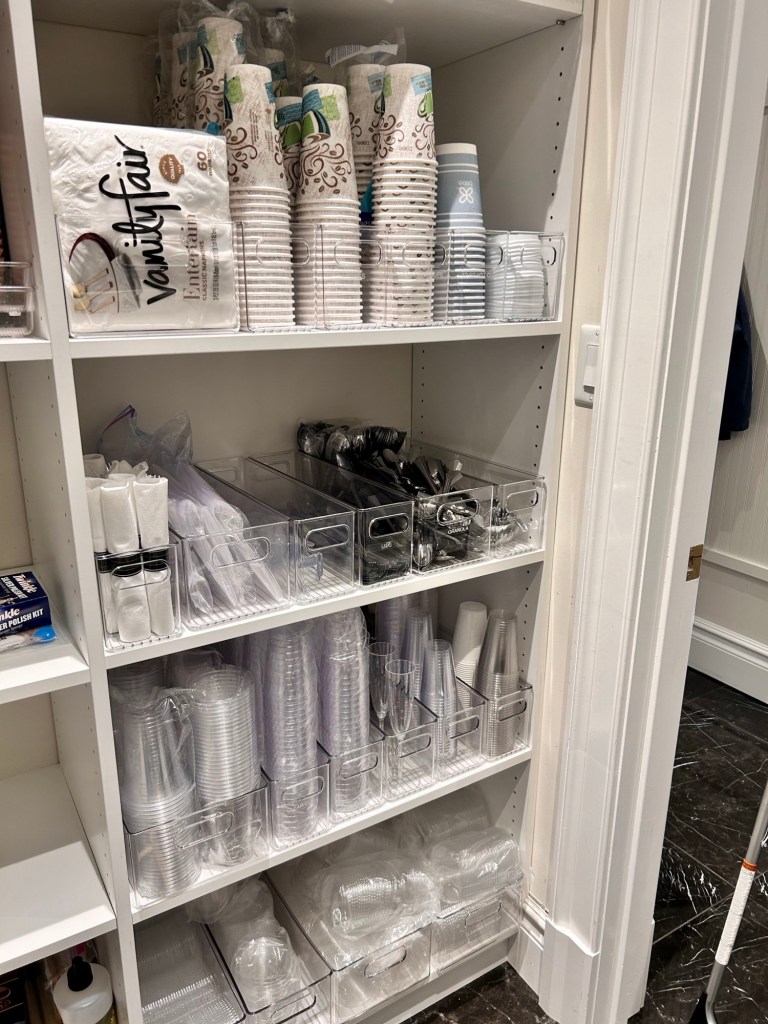
● Sort by category: large plates, small plates, bowls, napkins, cutlery, cups
● Use clear bins, drawers, or magazine holders for upright, visible storage—it’s easier to see what you have and what you’re missing.
● Add labels if needed, especially if others in the house are helping set the table.
When your paper goods are actually sorted and easy to grab, everything gets easier. You can see what you have, you know what you need to restock, and best of all—your daughter-in-law won’t have to yell across the kitchen to ask where the dessert plates are while you’re elbow-deep in brisket.
It’s not about being perfect—it’s about making it work.
What to Do With the Giant Stuff
Nothing sets the tone for a Shabbos table like a beautiful carving board, an elegant salad bowl, or a statement serving tray.
But during the week? These items are just… in the way. They’re bulky, awkward, and tend to get stashed wherever there’s space—only to come crashing out when you least expect it.
Instead of squeezing them in wherever they’ll fit, store them based on how often you use them.
If it’s something you don’t use often—like that oversized meat platter or the dip tray that only comes out for extended family meals—it doesn’t need prime real estate. Tuck it onto a high pantry shelf, stash it in an upper cabinet, or slide it into the dining room buffet alongside its equally large friends. Just be sure to keep like items together, so when Shabbos rolls around, you’re not hunting.
If it’s something you use every week—your challah board, go-to carving tray, or favorite salad bowl—keep it close. These MVPs should live near your prep area, where you can grab them while plating food or mid-meal, no kitchen relays required. A lower cabinet or deep drawer works great. If possible, use dividers to stand pieces upright or layer them neatly so they stay organized and easy to access.
And if space is tight (hello, small kitchens), try combining the items you use together. It’s efficient, it saves space, and it means less digging when you’re already running behind.
● Tuck your acrylic salad servers right inside the salad bowl
● Nest dip bowls inside the tray you always use with them
● Stack smaller bowls inside larger ones, instead of scattering them across three different shelves
The goal is simple: make your current space work harder—and smarter. A few intentional tweaks now, and you’ll spend less time rearranging shelves and more time enjoying your Shabbos table.
Let’s Fix Your Tablecloth Situation
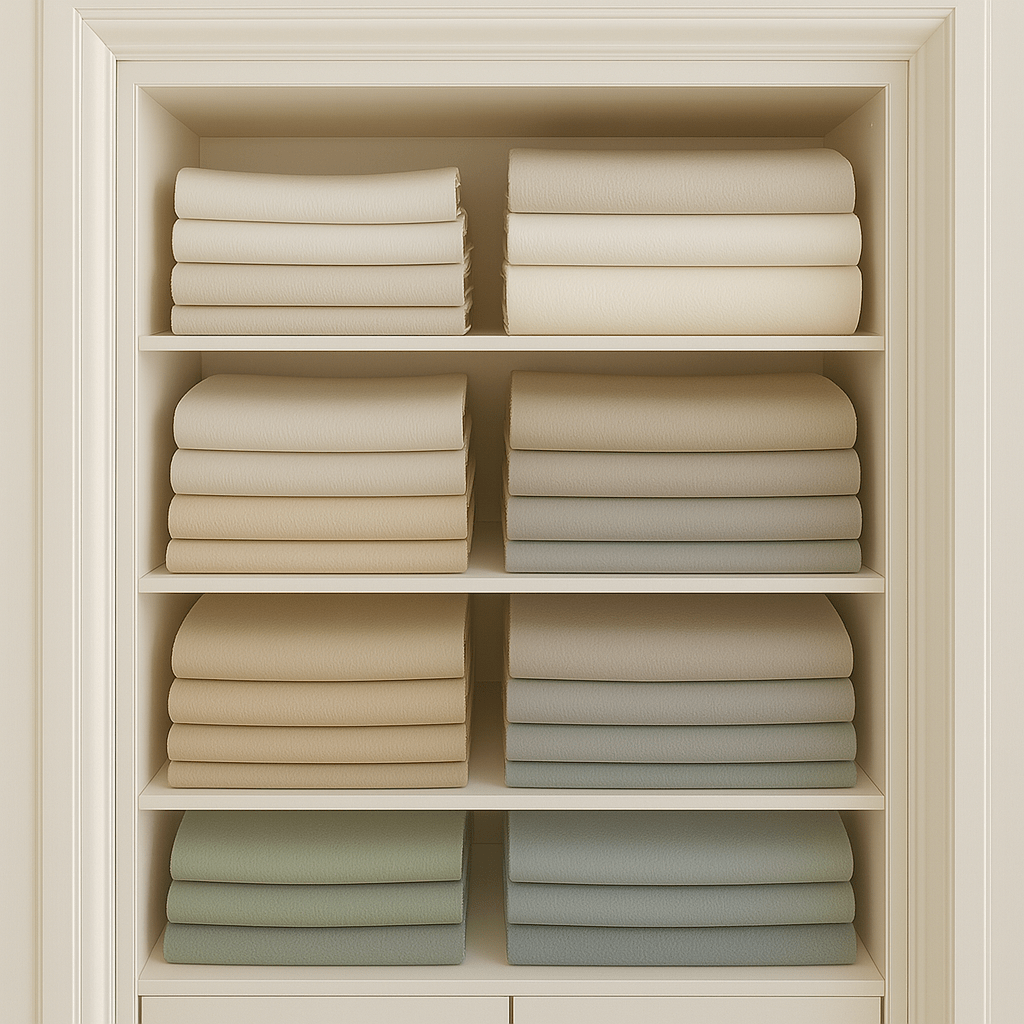
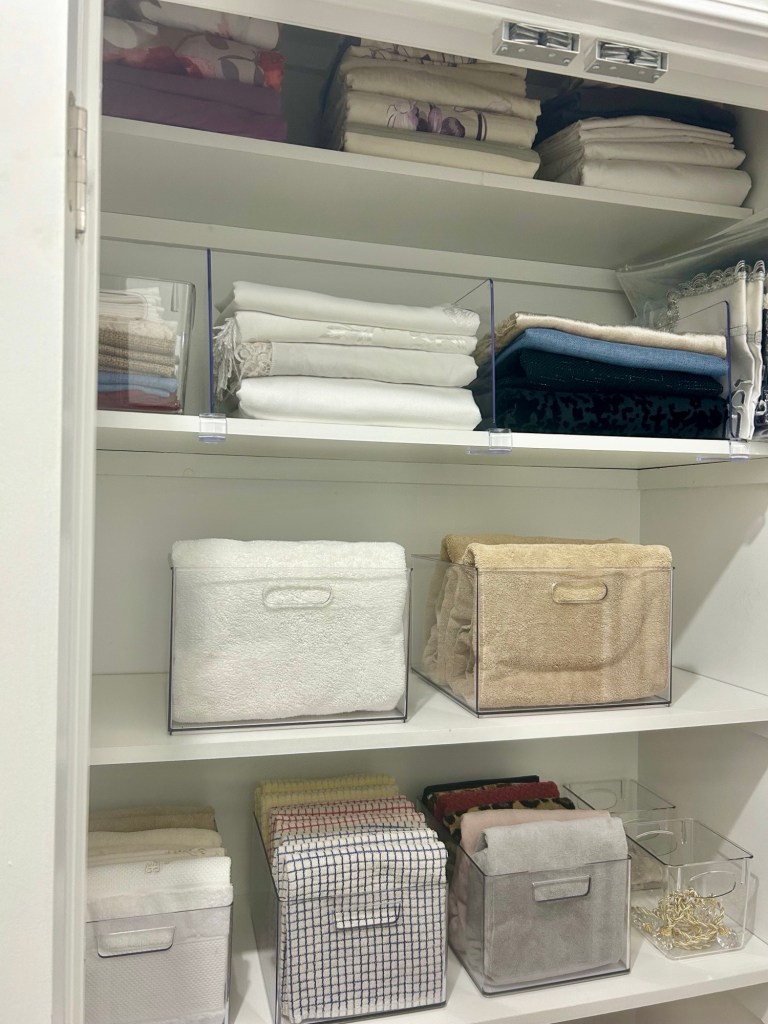
Tablecloths seem easy—until you try stacking more than two and the whole pile topples over. If your shelves are overflowing or your linens are constantly wrinkled, you’re not the only one.
Here’s a simple folding method that actually works:
● Fold once widthwise
● Then fold into thirds lengthwise to create a long, narrow strip
● Finally, fold that strip in half (or in thirds) depending on your shelf depth
Pro tip: Before that final fold, place the strip directly on your shelf or inside the drawer. That way, you can see if it fits neatly without sticking out—and you’ll maximize the space. Once you’ve got the perfect fold, use it as your template for the rest.
Always fold with the seam facing outward. It gives your stacks a clean, uniform look—and it makes it much easier to pull out the one you need without disturbing the whole pile.
To keep everything tidy, use shelf dividers or soft bins to hold stacks in place. I usually sort by color since it’s fast to scan and visually calming. But if another system works better—by size, by fabric, whatever fits your setup—go for it.
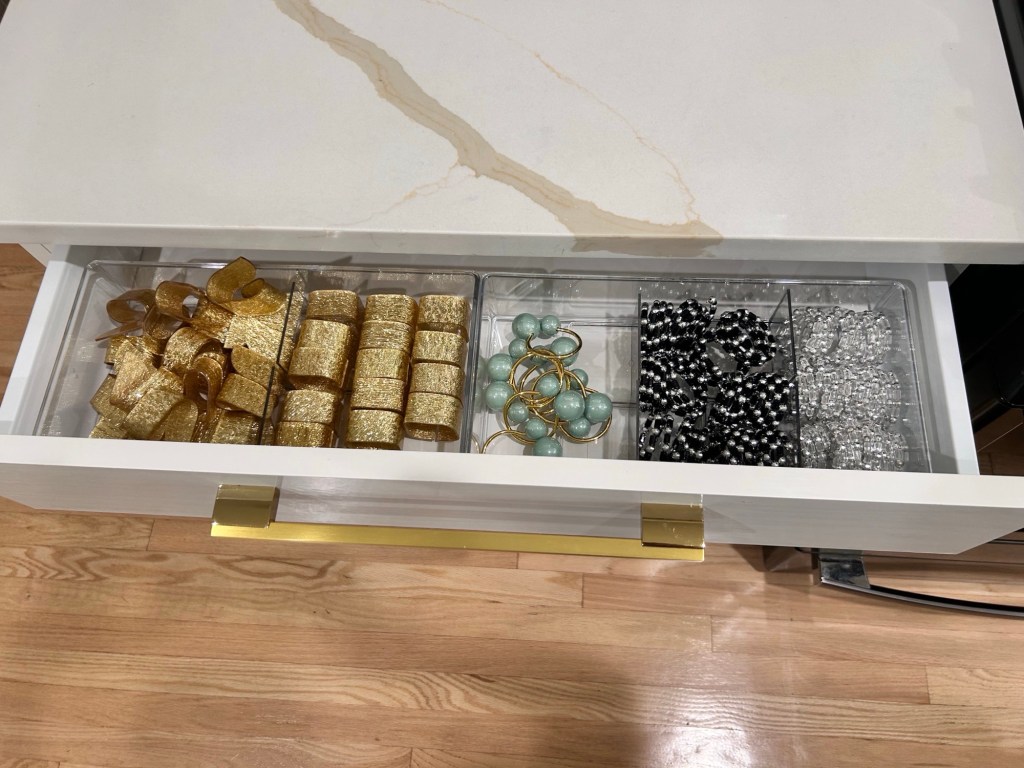
Bonus tip: I like to keep linen napkins and napkin rings in bins right next to the tablecloths. It keeps everything together and makes setting the table feel effortless.
So where should tablecloths live?
Your best bet is a linen closet or a dining room cabinet—somewhere nearby but not in the way. If you have extra pantry space, consider hanging a rod just for tablecloths. It’s wrinkle-free, visible, and and a total game changer.
Final Thoughts
Having guests for Shabbos doesn’t have to mean turning your house upside down. When your systems work, the prep gets easier—and suddenly, hosting feels less like a scramble and more like something you can actually enjoy.
You don’t need to reinvent your kitchen. You just need to know where things go and trust that they’ll be there when you need them. Because when the table’s set, the food’s warming, and you’re not tearing through cabinets looking for the dip tray, you can take a breath—and be present. And that’s what Shabbos is really about.
Happy Organizing,
Devorah
 The Organizer
Leave a comment