
Dear Devorah,
I really enjoyed your zoning article! After reading it, I set up kitchen zones in my own home – and honestly, the Bake Zone has been life-changing. For the first time, my kitchen actually feels like it works.
Lately, I keep hearing people mention subzones. Is that taking things too far, or is it actually something useful for real, everyday kitchens?
–Trying Not to Over-Organize
Dear Trying,
First of all, I’m impressed.
Setting up zones is a big deal – it’s more than just tidying up, it’s reshaping how your kitchen works. You paid attention to what your family needs and made it flow better.
That’s organizing at its best, and I love hearing that it’s working for you!
Let’s Talk Subzones
They’re not just for fancy kitchens with three islands and built-in espresso bars. And no, you’re not going overboard by wanting to take your zones a step further.
In fact, subzones are made for real homes – like yours – where the kids are grabbing snacks mid-wipe-down, and someone’s asking for foil while literally standing in front of it.
So what is a subzone?
It’s just a smaller setup within a bigger zone – designed to make life easier:
● A drawer where all the wraps and baggies live
● A shelf stacked with the snacks your kids actually eat
● A coffee corner with mugs, sugar, and pods all in one place
Nothing fancy. Just smart little setups that match how your kitchen actually runs.
Once you’ve got your main zones in place, subzones are the next layer. They’re the fine-tuning – the part that makes your system feel natural, fast, and easy to keep up.
The Coffee Zone
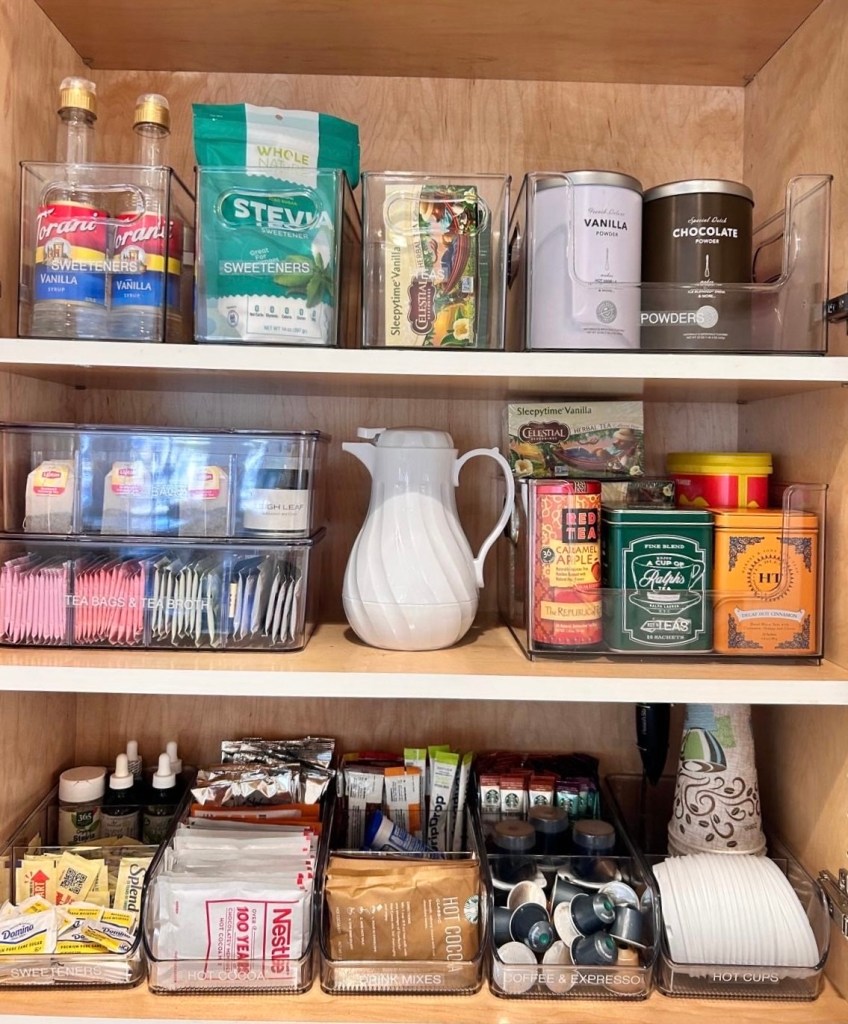
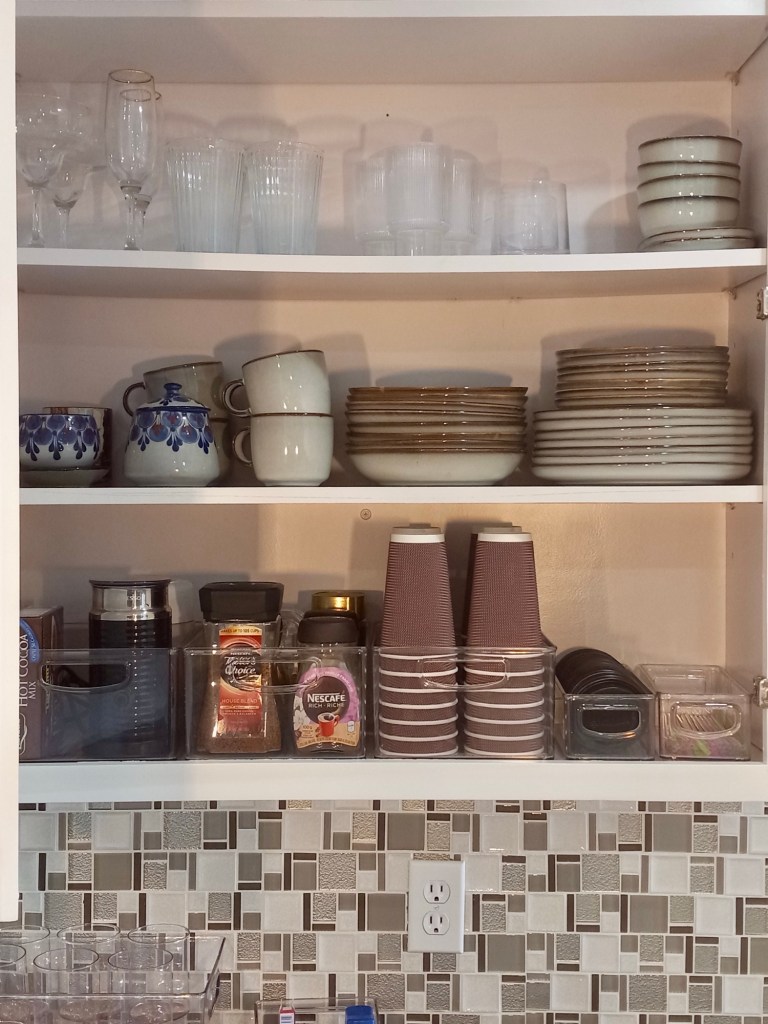
If your day begins with coffee – or simply can’t begin without it – a dedicated Coffee Zone is a total game changer.
No more rummaging through cabinets for mugs, no more balancing on chairs to find the sugar. Instead, you’ve got one calm, consistent spot that holds everything you need to get going.
Set it up near your hot water source – whether that’s an urn, kettle, or built-in instant hot – and gather all the essentials in one place:
● Coffee pods or ground coffee
● Mugs and travel cups
● Stir sticks or teaspoons
● Sugar, sweeteners, or flavored syrups
● Tea bags for the herbal crowd
● Cocoa mix for the kids (ahem, marshmallows)
● Cold brew or iced coffee options
Use whatever setup works best – turntable, drawer insert, or a few labeled bins. The goal is simple: one-stop caffeination. Everything you need, right where you need it.
Because honestly, the only thing worse than no coffee… is hunting for it half-asleep.
The Snack Zone
Snacks might not have their own category on the food pyramid, but in real life? They dominate.
From school bags to car rides to late-night cereal raids – snacks are always in demand. And without a home, they’ll quickly take over every corner of your space.
That’s where a Snack Zone saves the day. It doesn’t have to be fancy – just practical. A drawer, a low pantry shelf, or even a big bin in a base cabinet can work perfectly. The key is to keep everything together, easy to see, and even easier to grab.
Include your usual lineup:
● Chips, pretzels, crackers, rice cakes
● Applesauce or fruit pouches
● Granola bars, trail mix, raisins, fruit leather
● Whatever else your kids swore they’d eat… and now ignore completely
If you want kids to pack their own snacks, keep the zone at their level. If you prefer a little more control, place it higher up and portion things out as needed.
Either way, a dedicated Snack Zone cuts the chaos and keeps everyone fed – without the frantic digging.
The Paper Goods Zone
Whether you’re packing up dinner, rushing through breakfast, or just trying to skip another round of dishes, having paper goods in one place makes life so much easier.
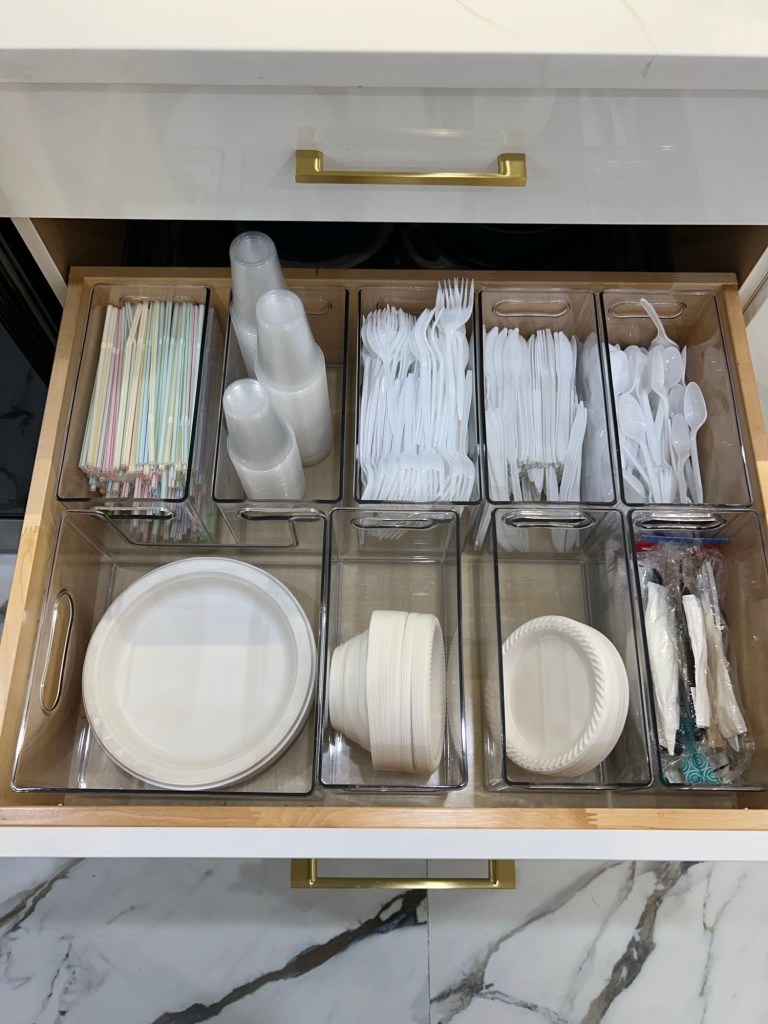
This zone is for all the everyday disposables:
● Paper plates
● Plastic forks, spoons, and knives
● Napkins
● Straws
● Plastic cups
Keep them all together and close to where your family eats – ideally in a drawer near the table. That way, setting the table or grabbing something mid-meal takes seconds.
If you’ve got a deep drawer, make the most of it. Use bins to divide your paper goods and cutlery – or, if it’s easier, keep the plastic cutlery in its original boxes. Just add a few drawer dividers to keep everything neat and easy to grab.
You don’t need a full setup worthy of a party store.
You just need the basics to be easy to find, restock, and grab.

The Wrap & Foil Zone
If you’ve ever stood in your kitchen holding a half-wrapped sandwich and wondering where the foil went, you already know why this zone matters.
The Wrap Zone is a small setup with a big impact. It’s where you keep all the grab-and-go food prep essentials:
● Foil
● Parchment paper
● Plastic wrap
● Ziploc bags (all sizes)
● Wax paper
● Extra sandwich bags or produce bags
You don’t need a huge drawer – just one designated spot where everything fits neatly. If your kitchen has two Cook Zones (meat and dairy), it’s worth setting up a small Wrap Zone near each one. They don’t have to be identical – just keep enough on hand so you’re not sprinting across the kitchen with greasy hands searching for a baggie.
Keep overflow in the pantry if needed, but store your everyday prep items right where you cook. That way, you’re always just one drawer pull away from wrapping, bagging, or sealing without a second thought.
Final Thoughts
Subzones won’t make dinner cook itself.
They won’t stop your kids from asking where the forks are – while holding one in their hand.
But they will make your kitchen run smoother, faster, and with way less chaos.
So go ahead – redo the snack drawer. Set up your foil zone. Give your coffee the respect it deserves.
Your future self (and your 7 a.m. brain) will thank you.
You got this.
Happy Organizing,
Devorah
 The Organizer
Leave a comment