
Dear Devorah,
Every organizing picture I see is full of labels, but I don’t really get the hype. Do I actually need to label every bin, or is this just an organizer preference that looks pretty?
– Sticker Skeptic
Dear Skeptic,
I love this question, because labeling might seem like a small detail, but it’s actually one of the most powerful things you can do for your home. Not because it’s pretty – but because it keeps your system together long after the organizing glow wears off.
Labels aren’t accessories. They’re the instruction manual.
You can create the world’s most beautiful pantry… but if no one knows what goes where, it will fall apart in six days. Five if there’s a snow day.
Labels matter – especially in the real spaces: the toy room explosion, the laundry room you avoid, the pantry with 17 different types of snacks.
Let’s talk about why labeling works, how to choose the right kind, and what makes labels effective in everyday life.

Why Labels Matter
Forget aesthetics for a second. Forget matching fonts. Let’s talk about daily survival.
1. Labels take the pressure off you.
With labels in place, you’re no longer the family’s human GPS. You don’t have to remember where everything lives or answer the same “Where does this go?” question twenty times a day. One clear label does the talking for you – suddenly everyone knows where the batteries, scissors, or lightbulbs belong.
2. Labels make your family independent.
A labeled home means fewer questions, fewer piles, and fewer “I didn’t know!” moments. Kids can clean up without guessing. A husband can find the Tylenol without texting you from across the house. A babysitter can tidy without rearranging your entire pantry.
Labels give everyone the same roadmap.
3. Labels protect your system from falling apart.
A great organizing project isn’t about the setup – it’s about whether the space stays functional in real life. Labels make that possible. When a bin says “Snacks,” it takes a lot of confidence (or chutzpah) to drop a screwdriver inside. Labels create gentle boundaries that prevent categories from blending and keep the system intact.
Labels aren’t about being fancy. They’re about making your hard work last.
Who’s Using the System?
Before choosing labels, think about the people interacting with the space. The best label isn’t the prettiest – it’s the one that makes sense for the user. When the label fits the user, the whole system runs better.
1. If You Have a Cleaning Lady
If your cleaning lady handles most of the cleanup, label with her in mind.
That often means:
• labels in Spanish, or
• using both Spanish + English labels
I also recommend labeling the shelves, not just the bins. The clearer the instructions, the more consistent the maintenance will be.
And while Google Translate works in a pinch, the best method is walking the space with your cleaning lady and asking what she calls each category. It avoids misunderstandings, makes her feel included, and keeps your home looking the way you want week after week.
2. For Kids: Make It Visual
Kids don’t think in categories – they think in pictures. Their labels need to be obvious, visual, and a little bit fun.
In their spaces, I might add:
- a cute symbol from the label maker
- a sticker next to the their name
- a design that makes the space feel inviting
These small touches make kids far more motivated to put things back.
3. Toy Room Labels That Actually Work
Playrooms need labels that kids can understand instantly. Here are a few ways to get there – and you can mix and match depending on your space:
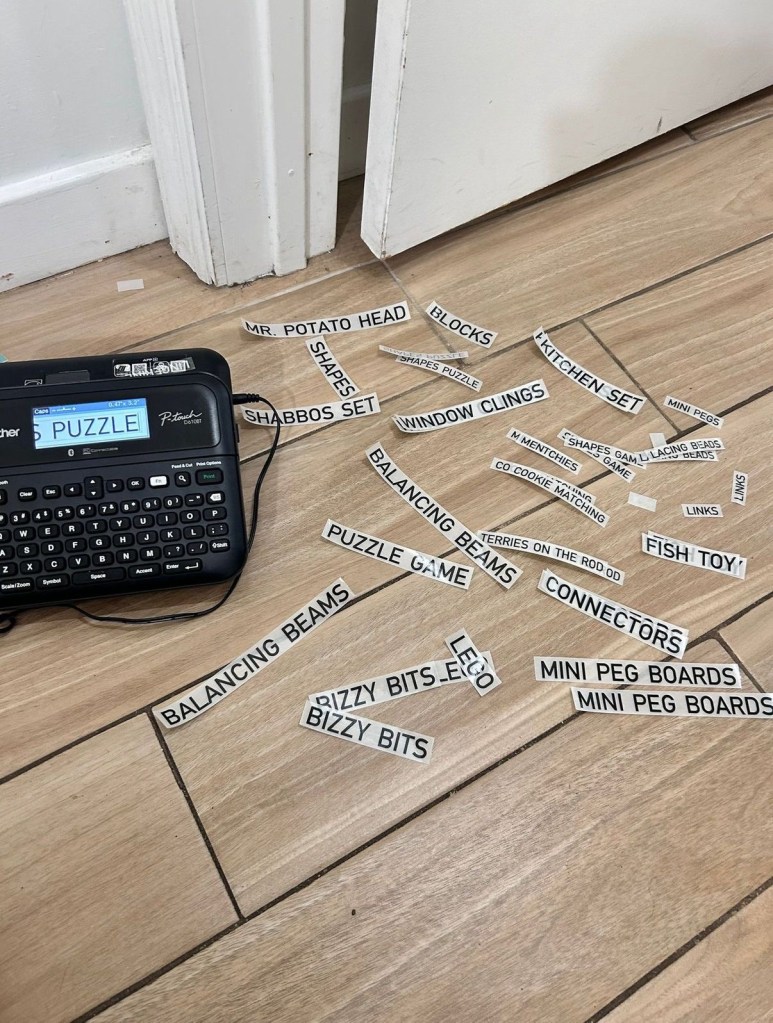
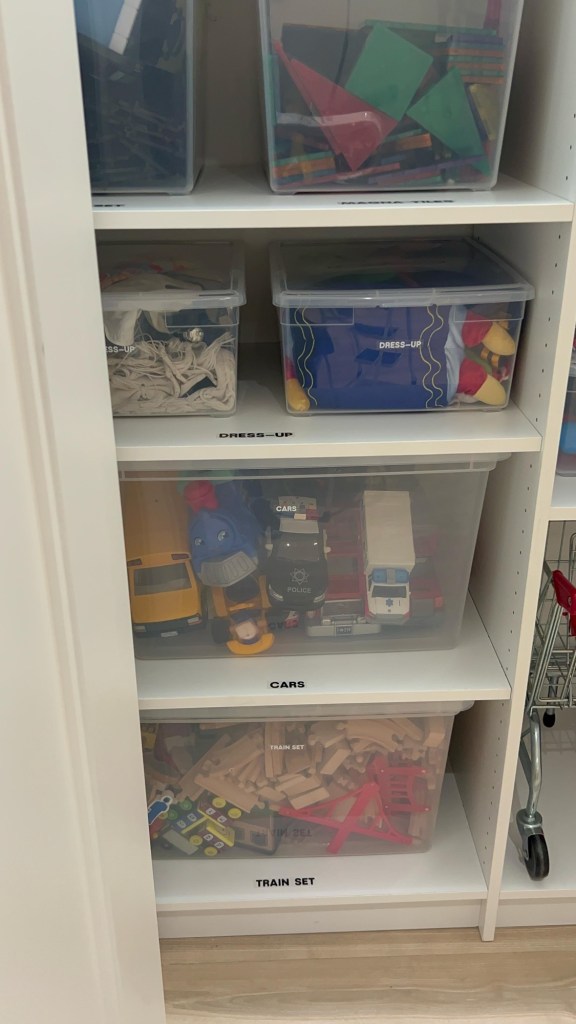
- Basic Labels With a Sticker or Symbol
Start simple: print a basic label (or handwrite one) and add a small sticker or icon next to it.
For younger kids, that tiny visual cue is everything – they don’t need to read “Cars” if there’s a little car sticker beside it. It’s quick, cute, and makes cleanup much easier.
- Preprinted or DIY Picture Labels
Amazon sells adorable preprinted toy labels, but they rarely cover the toys our kids actually use, like magnet tiles, clicks, or mitzvah kinder sets.
If you like this option, I recommend making your own in Canva or Word. You get the exact categories you need, they look great, and you’re not stuck trying to match “magnet tiles” to a cartoon fire truck.
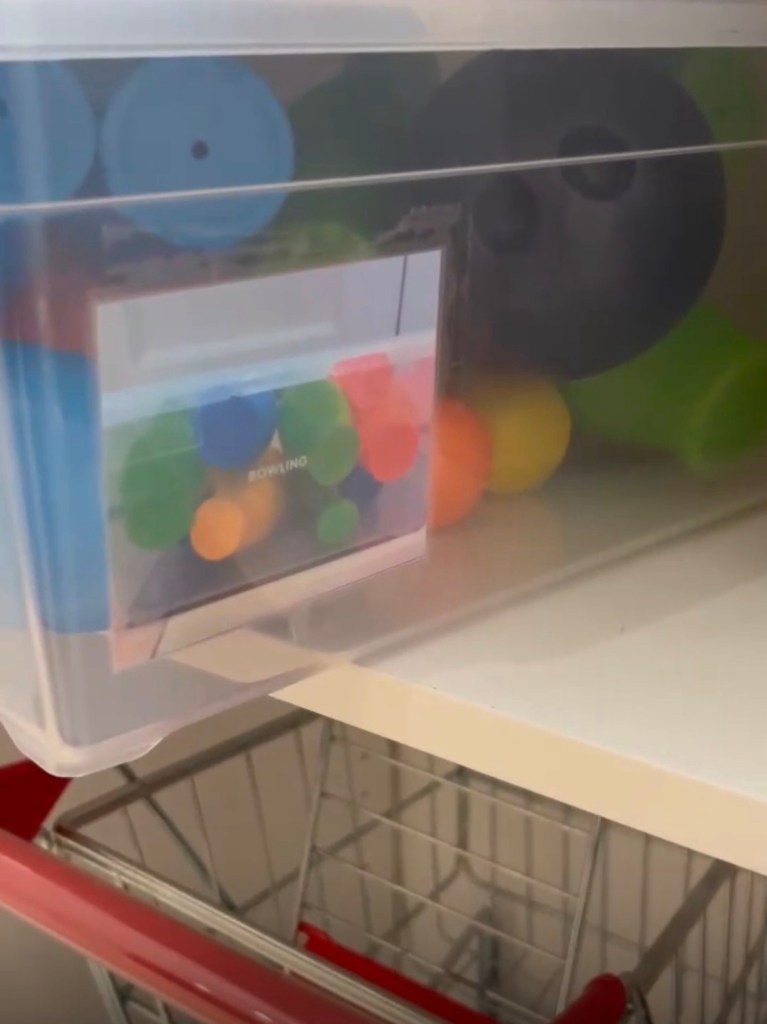
- Photo Labels
This is the next-level method. In some playrooms, once everything is organized, I take photos of each bin with the actual toys inside, laminate them, and tape the picture to the inside front of the bin.
Kids (and the cleaning help) instantly understand what belongs where because the label matches the real contents.
It takes more effort upfront, but it creates a system that really holds up over time.
4. For Homes With Busier Habits
Some homes function better with bigger, louder labels – not because the people are messy (which is why this section isn’t called “for messy homes.”) Life is busy. When you’re juggling work, kids, appointments, supper, and a hundred moving parts, even great systems fall apart unless the labels are extremely clear.
For these homes, I choose labels that are:
• large
• clear
• straight to the point
Bold labels remove the guesswork – and make it far more likely that things end up where they belong, even on the busiest days.
5. For Naturally Tidy Homes (or Homes With Strong Household Help)
If your home already runs smoothly and people generally put things back where they belong, you can get away with something more subtle.
These labels can be:
- smaller
- clean and minimal
- light and aesthetic
These homes don’t need loud reminders – just a touch of clarity and polish.
Now Ask: What Surface Are You Labeling?
Even once you know who you’re labeling for, the label still needs to stick – literally. Different materials require different types of labels, and choosing the right one makes all the difference.
Smooth Surfaces
(Plastic, Acrylic, Wood, Glass)
These are the easiest surfaces to label. Almost anything will adhere well: white labels, plastic labels, chalkboard labels, printed labels, handwritten labels – if it’s smooth, it will stick.
Best options:
- Standard mailing labels
- Label-maker labels
- Clear adhesive labels
They stay put, look clean, and don’t require anything fancy.

Textured Surfaces
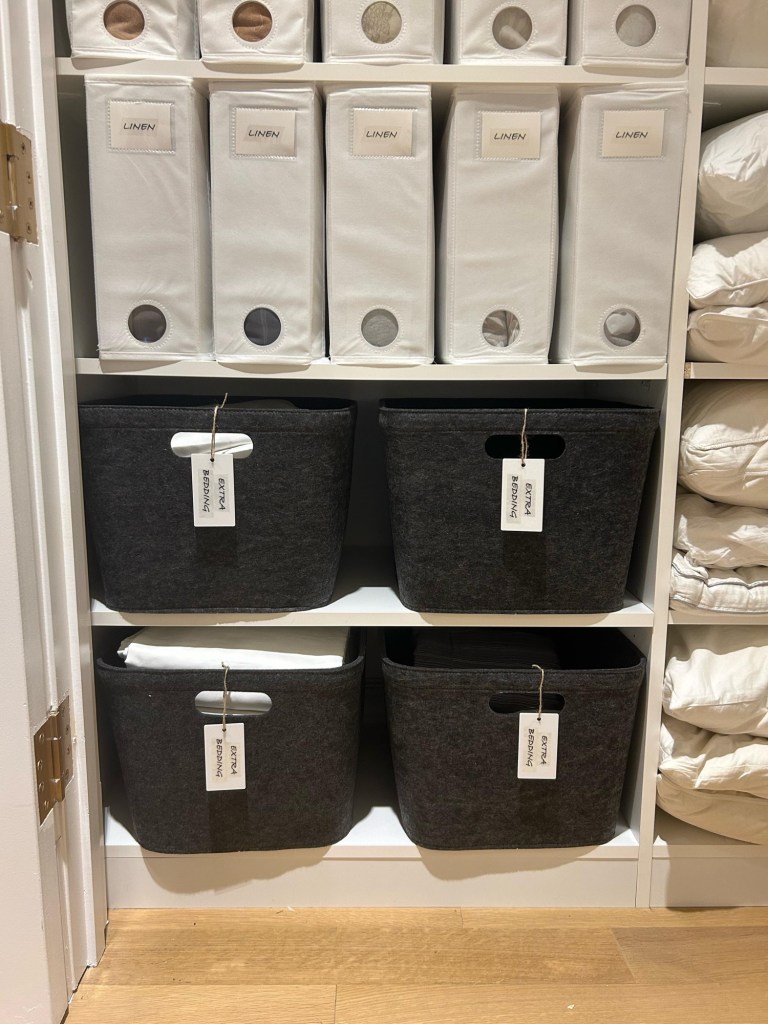
(Wicker, seagrass, rope, fabric bins)
Traditional stickers will peel, curl, or look like they’re trying to escape. They simply don’t stick to uneven textures.
On these surfaces use:
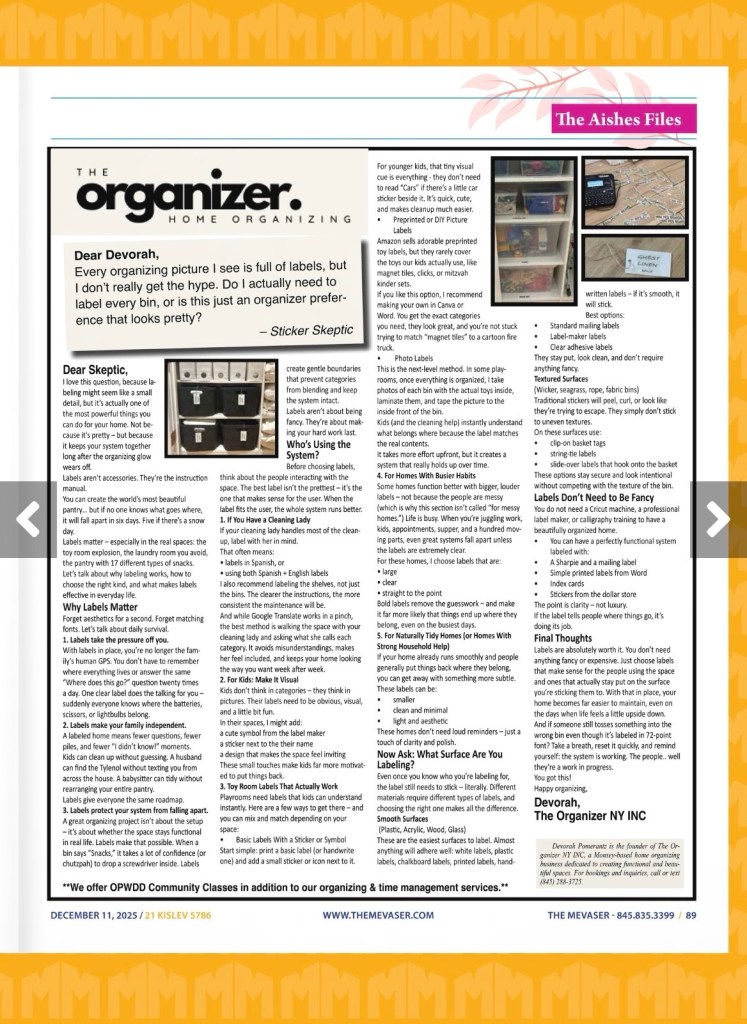
- clip-on basket tags
- string-tie labels
- slide-over labels that hook onto the basket
These options stay secure and look intentional without competing with the texture of the bin.

Labels Don’t Need to Be Fancy
You do not need a Cricut machine, a professional label maker, or calligraphy training to have a beautifully organized home.
You can have a perfectly functional system labeled with:
- A Sharpie and a mailing label
- Simple printed labels from Word
- Index cards
- Stickers from the dollar store
The point is clarity – not luxury.
If the label tells people where things go, it’s doing its job.
Final Thoughts
Labels are absolutely worth it. You don’t need anything fancy or expensive. Just choose labels that make sense for the people using the space and ones that actually stay put on the surface you’re sticking them to. With that in place, your home becomes far easier to maintain, even on the days when life feels a little upside down.
And if someone still tosses something into the wrong bin even though it’s labeled in 72-point font? Take a breath, reset it quickly, and remind yourself: the system is working. The people.. well they’re a work in progress.
You got this!
Happy organizing,
Devorah
 The Organizer
Leave a comment