Dear Devorah,
I live in a small house, and whenever I mention feeling overwhelmed by clutter, people tell me the only real solution is to move. Is it actually possible to organize a small space, or is that just the reality?
– Running out of Room
Dear Running,
If moving were that simple, most of us would have packed up by now.
I understand why people suggest it. More space usually does make clutter easier to manage. When you have extra rooms, bigger closets, and more storage, things naturally feel less tight. But most families aren’t asking because they want a different house. They’re asking because they want their current home to feel calmer, less chaotic, and more manageable.
So let me be very clear: yes, it is absolutely possible to organize a small home. It just doesn’t start with bins or storage tricks. It starts with mindset.
Organizing a small space is about learning how to live well within real limits – with intention, honesty, and a little creativity.

Step One: Accepting the Limits of the Space You’re In
Before we talk about bins or systems, we need to talk about the house itself.
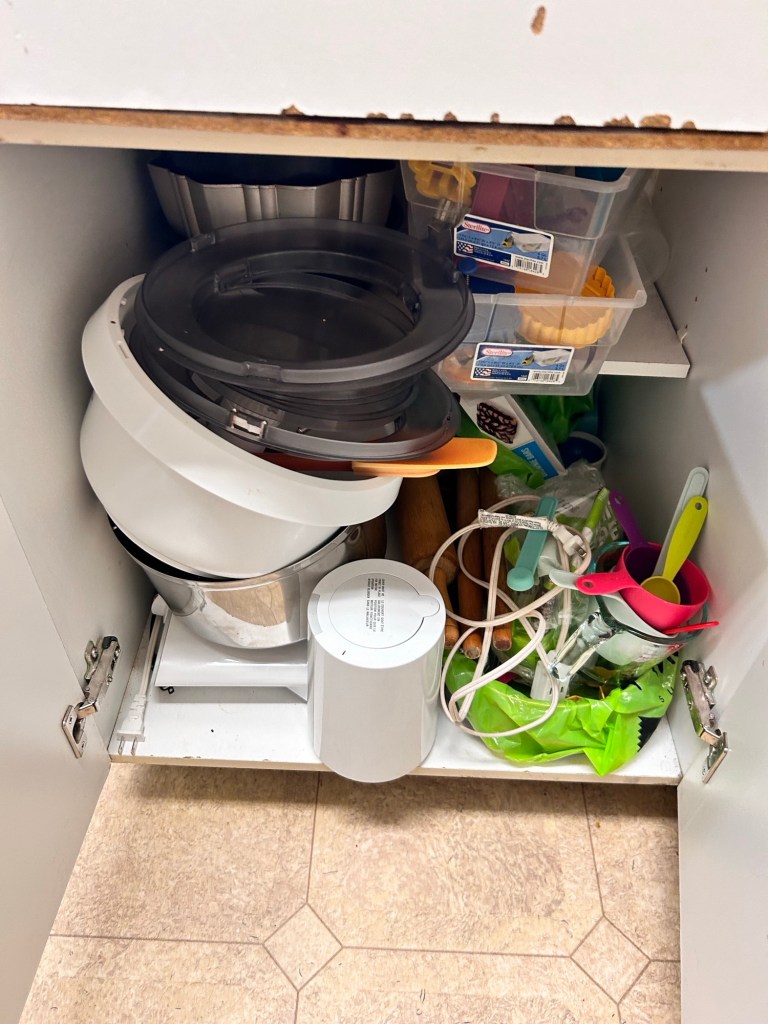
Small homes have real, physical limits. There are only so many cabinets, only so much closet space and only so many places things can go. When you’re bumping up against those limits day after day, day, it can start to feel like you’re constantly behind, no matter how much effort you put in.
That isn’t a reflection of how hard you’re trying. It’s simply the reality of the space.
For a lot of families, living in a small home wasn’t a deliberate decision. It was shaped by finances, schools, community, or timing. So when someone casually says, “You just need a bigger house,” it can feel dismissive, like the struggle is a personal failure instead of a very real situation.
Accepting the limits of your home doesn’t mean giving up. It means stopping the constant argument with space. And once you do that, something shifts. The pressure lifts, the guilt eases, and organizing starts to feel possible instead of personal.
Step 2: Getting Clear on the Purpose of the Space
Before we decide where things should go, we have to pause and ask a more important question: what are we actually trying to achieve in this space?
This step makes organizing easier almost immediately – and it’s the part most people skip.
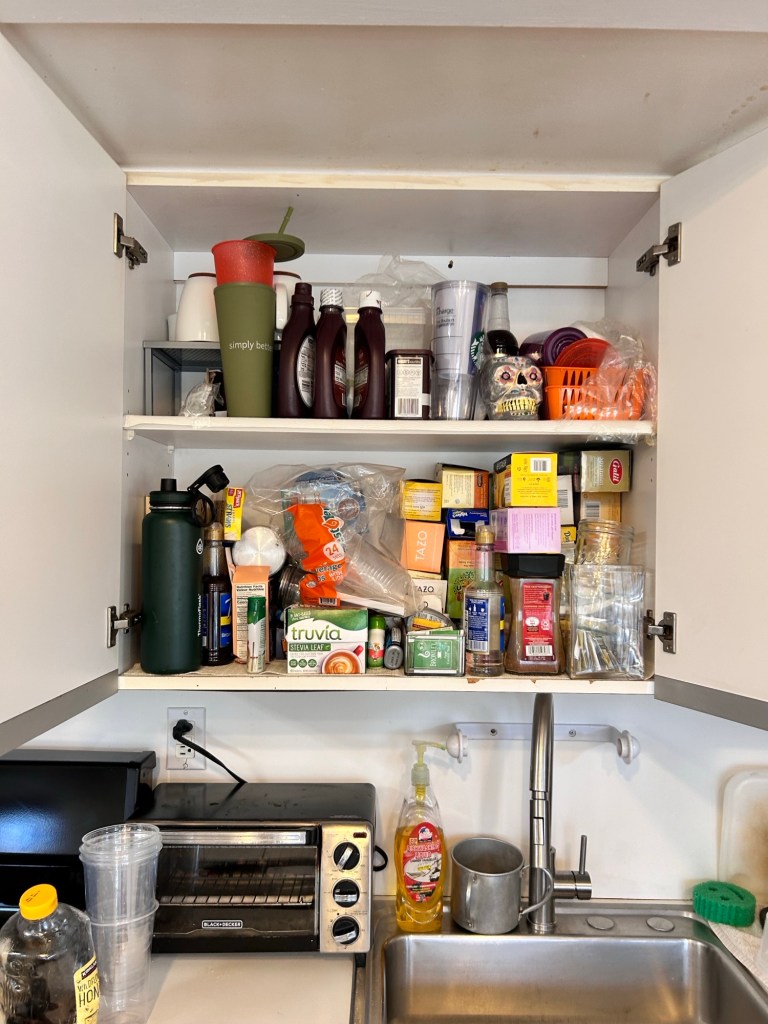
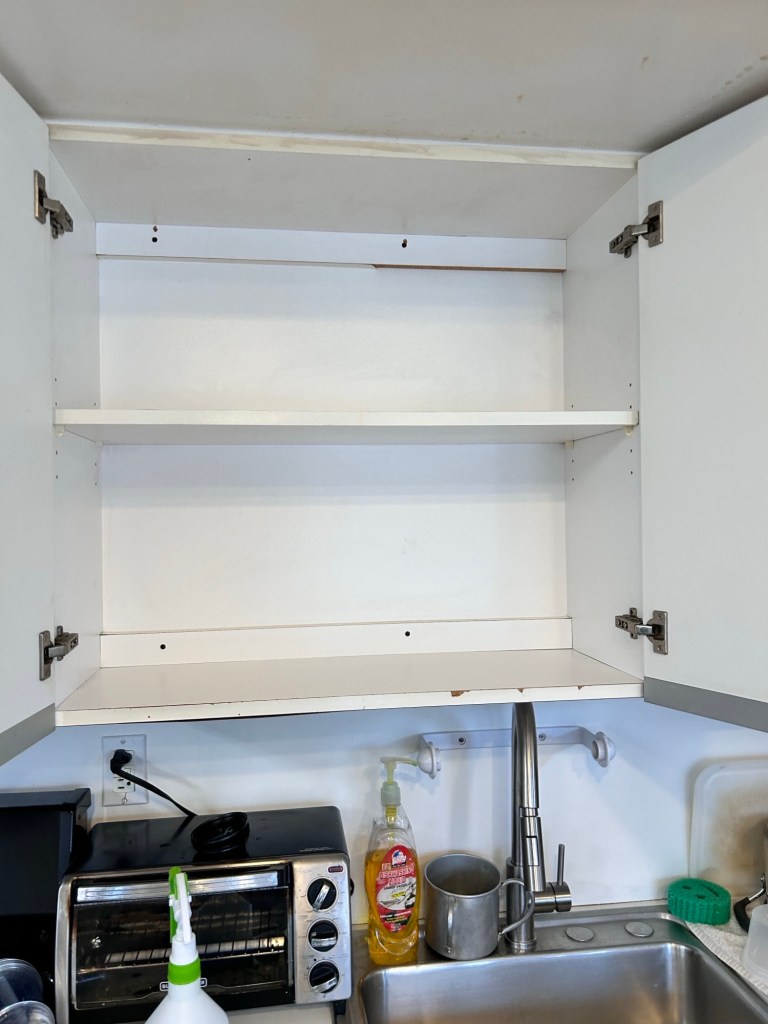
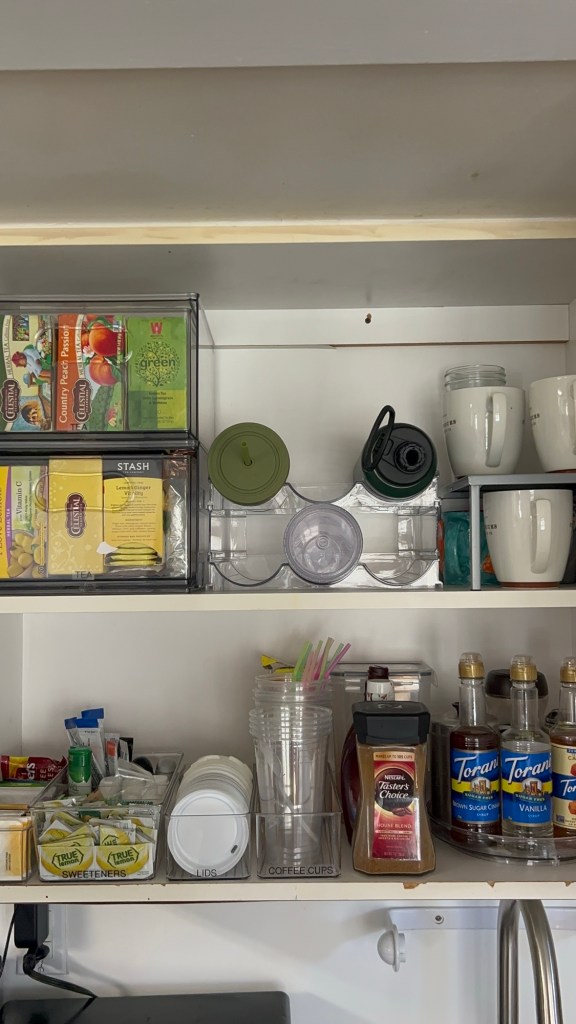
When I work with clients in small homes, I don’t start by sorting their things. I start by asking questions: How do you want this space to feel? What matters most here? What’s the thing that’s bothering you every single day?
Think about the kitchen.
Is your goal to keep everything in one central place?
Do you want clear counters?
Do you want the room to feel calm and open?
Or do you just want the cabinets to close without a fight?
There’s no universal right answer. But there is a right answer for you.
Once the goal is clear, decisions become much easier. If clear counters are the priority, then maybe not everything gets to live in the kitchen. If having backstock on hand matters more, then maybe the counters won’t always be clear – and that’s okay, because it’s a choice you’re making intentionally..
The same goes for large items. Keeping a big chicken soup pot in the kitchen is completely fine. It just means that the cabinet now belongs to the pot, and something else may need to move. The problem isn’t the item – it’s asking the space to do too many things at once.
Small homes feel overwhelming when everything is competing for priority. They feel calmer when the space is working toward a clear purpose.
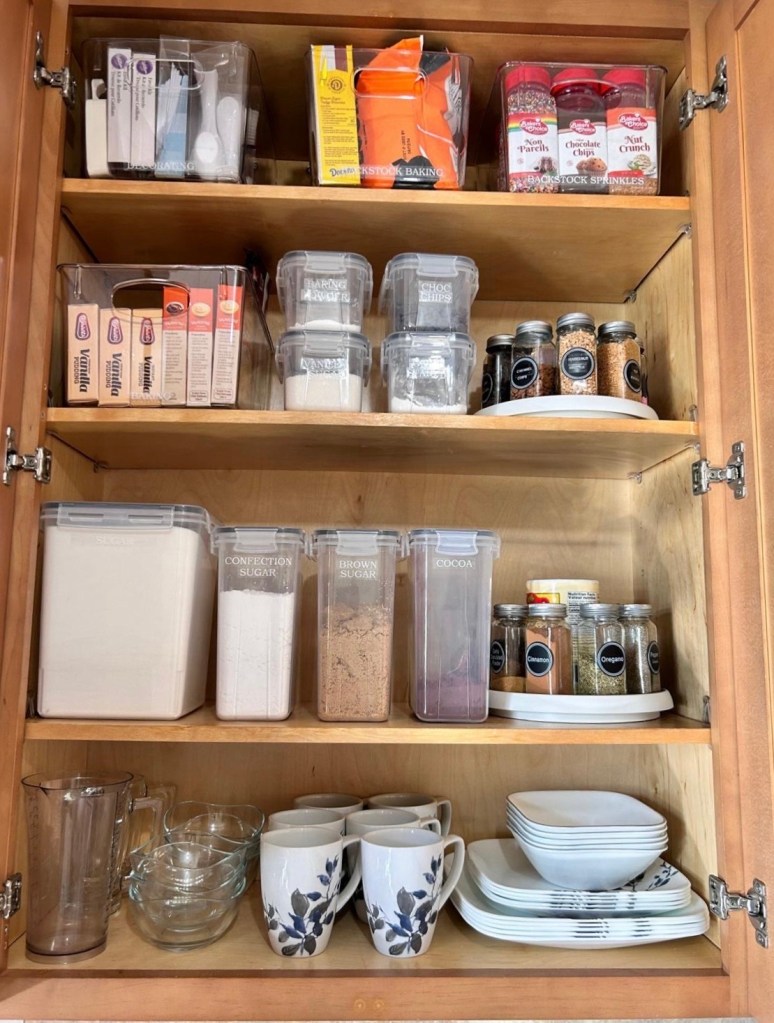
Step 3: Getting Creative
This is usually the part where people expect me to say, “Let’s add bins.” But bins aren’t always the answer.
In small homes, adding containers can sometimes make a space feel more crowded, not less. Bins take up room, create extra walls inside cabinets, and if they’re not the right fit, they can actually work against the space instead of helping it.
So before adding anything, I step back and ask: are we really using this space well – or are we just defaulting to what’s familiar?
Sometimes a bin is exactly what’s needed. Sometimes it’s adjusting shelves so items actually fit instead of being stacked awkwardly. Sometimes it’s using vertical space that’s been ignored for years. And sometimes, it’s recognizing that something doesn’t belong in this space at all.
This is where real creativity comes in.
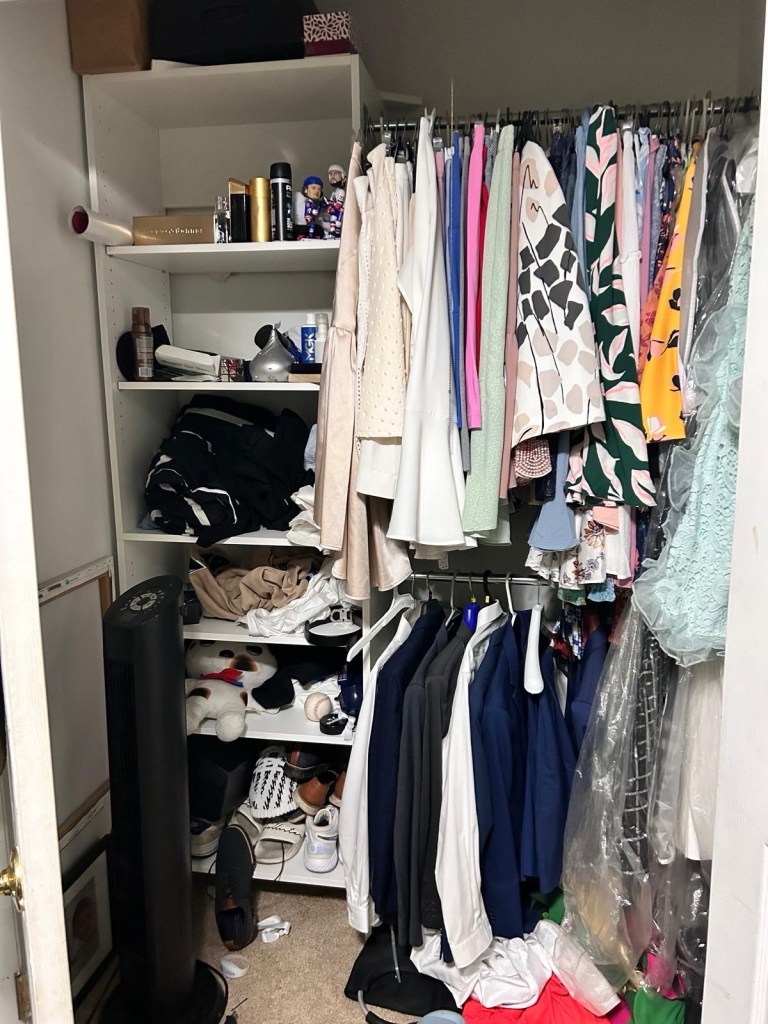
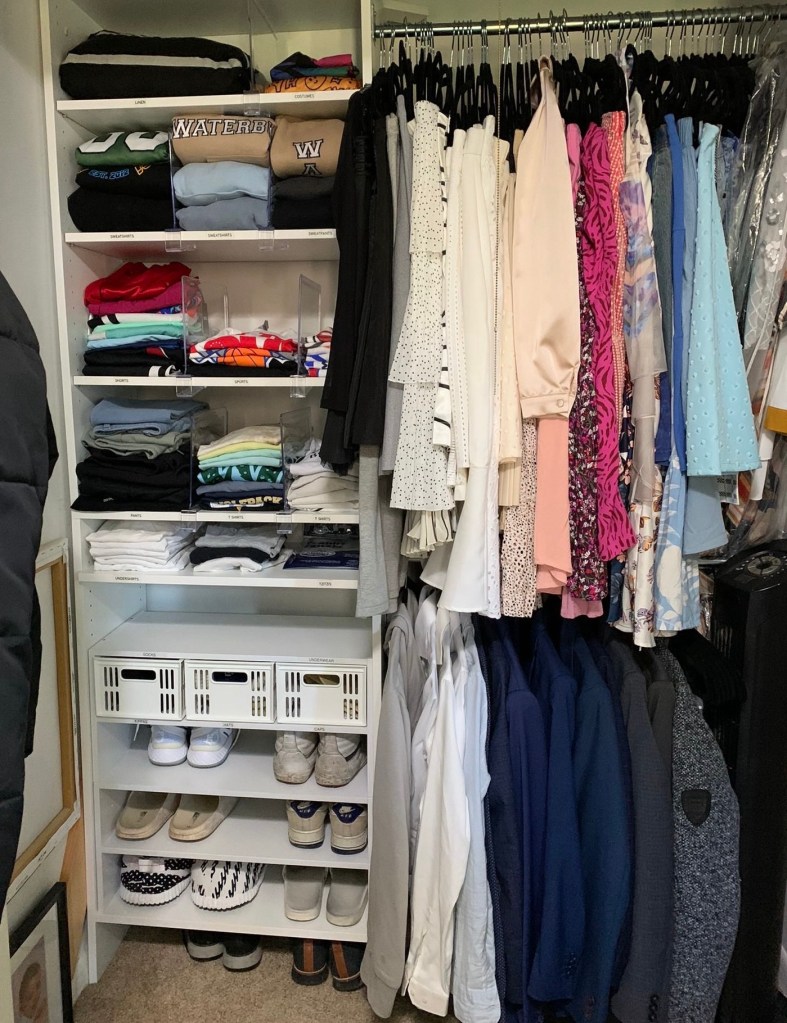
I’ll look for things like pantry doors that are completely empty while shelves are overflowing, under-sink cabinets full of wasted space, or closets that rely only on shelves and ignore walls. In those cases, the solution usually isn’t adding more – it’s using what’s already there more intentionally.
That might mean over-the-door storage that adds function without taking up shelf space, pull-out racks for narrow gaps that usually get ignored, or moving rarely used items out of prime real estate entirely. Serving platters don’t always need to live in the kitchen. Extra linens don’t need the easiest-to-reach shelf. Items you use once a year shouldn’t block the things you use every day.
Good organizing isn’t about filling every inch. It’s about making sure the space supports the way you actually live.And when creativity is guided by a clear goal – whether that’s clear counters, calmer cabinets, or simply being able to close the door without shoving – the space starts to feel lighter, not tighter.
Final thoughts:
Living in a small house with a family can be hard. There’s less margin for mess, and when something isn’t working, you feel it immediately. Nothing stays hidden for long, and clutter shows up fast.
But small homes also have a lot going for them. They’re often warmer, more familiar, and more connected. And when they’re set up with intention, they can feel calm, functional, and genuinely comfortable.
The goal isn’t to make your home look bigger than it is. It’s to make it work for the way you actually live.
That means being realistic about the space you’re in, choosing priorities instead of trying to fit everything everywhere, and letting go of the idea that your home needs to look like someone else’s.
Once you stop expecting a small house to behave like a big one, organizing gets a lot easier. The decisions feel clearer, the space feels calmer, and it stops being about clutter and starts being about intention.
So no, you don’t need to move. You just need your space to work with you instead of against you. And maybe one cabinet that closes on the first try. That’s usually a good place to start.
You got this!
Happy Organizing,
Devorah
 The Organizer
Leave a comment