Dear Devorah,
My office is always a mess. Papers everywhere. Bills, mail, school forms, random documents I’m afraid to throw out. I organize it… and two weeks later it’s chaos again. What am I doing wrong? How do I keep it neat without spending my life filing papers?
– Mail Meltdown
Dear Meltdown,
If your desk seems to undo your cleaning efforts almost immediately, you’re not imagining things.
Paper has a special talent. It doesn’t scream for attention – it quietly multiplies, usually on the one surface you actually need. One envelope turns into a stack. A stack turns into a pile. And suddenly you’re working around papers instead of with them.
So let’s talk about this realistically – not “perfect office” realistically, but real-life, someone-just-dropped-off-the-mail realistically.

Step One: Do You Actually Need All These Papers?
Before we talk systems, let’s talk honesty.
Are you keeping papers because you truly need them – or because you’re nervous you might need them one day? That’s where most paper clutter actually begins.
Before we talk bins or folders, the first step is editing. Go through your piles and ask yourself:
- Have I ever actually needed this?
- If I needed it, could I get it again?
- Is this already available online?
Banks, utilities, doctors, schools – almost everything lives on a website or app. Which is comforting… until you forget your password – but that’s a topic for a whole different article.
A huge percentage of the papers people hold onto can be accessed online, which means that if you haven’t pulled that paper out in the last year, it’s probably safe to let it go.
Step Two: Consider Going Digital (Even Partially)
Some people don’t want to get rid of paper entirely. They don’t need less – they need to know they can find what they need quickly.
If that sounds like you, consider a simple digital backup.
You don’t need fancy scanners or an advanced tech degree. Just take a clear picture on your phone, upload it to Google Drive, and drop it into a folder.
You might create folders like:
- Medical
- School
- Bills
- Banking
- Home
- Taxes
The real benefit here is access. You can find that document from anywhere – no digging through drawers, no last-minute panic before an appointment – and it doesn’t have to live on your desk anymore.
You don’t have to digitize everything. Even backing up your most important papers can dramatically reduce the amount of physical clutter – and the mental load that comes with it.
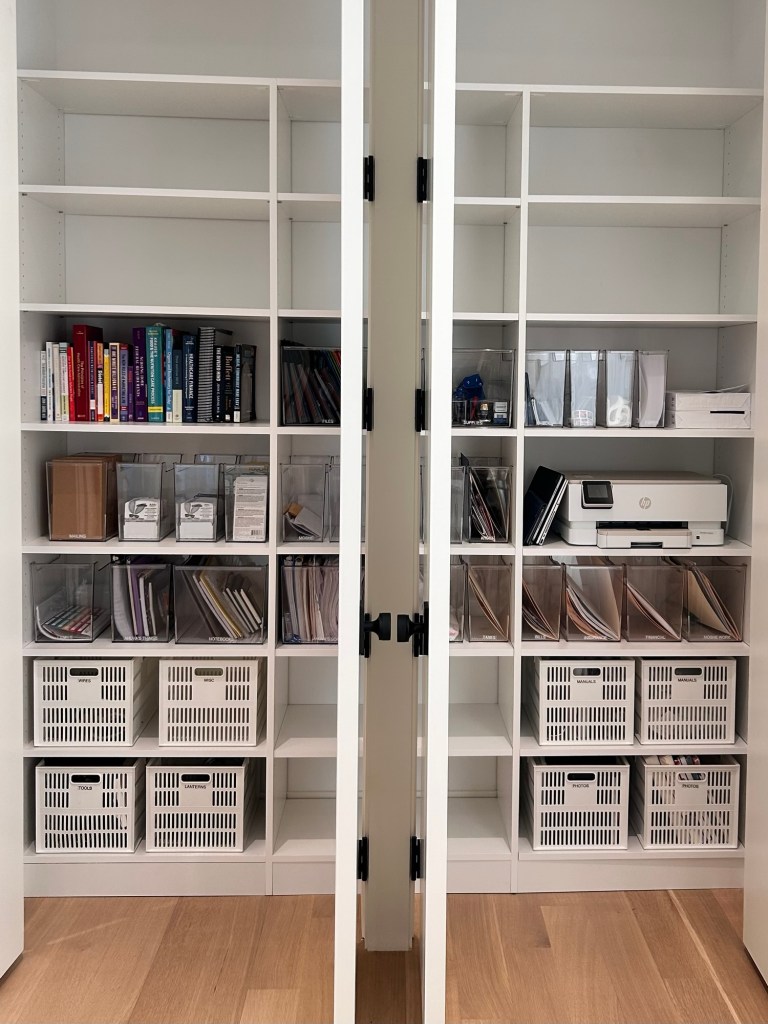
Step Three: If You’re Keeping Paper, Give It a System That Makes Sense
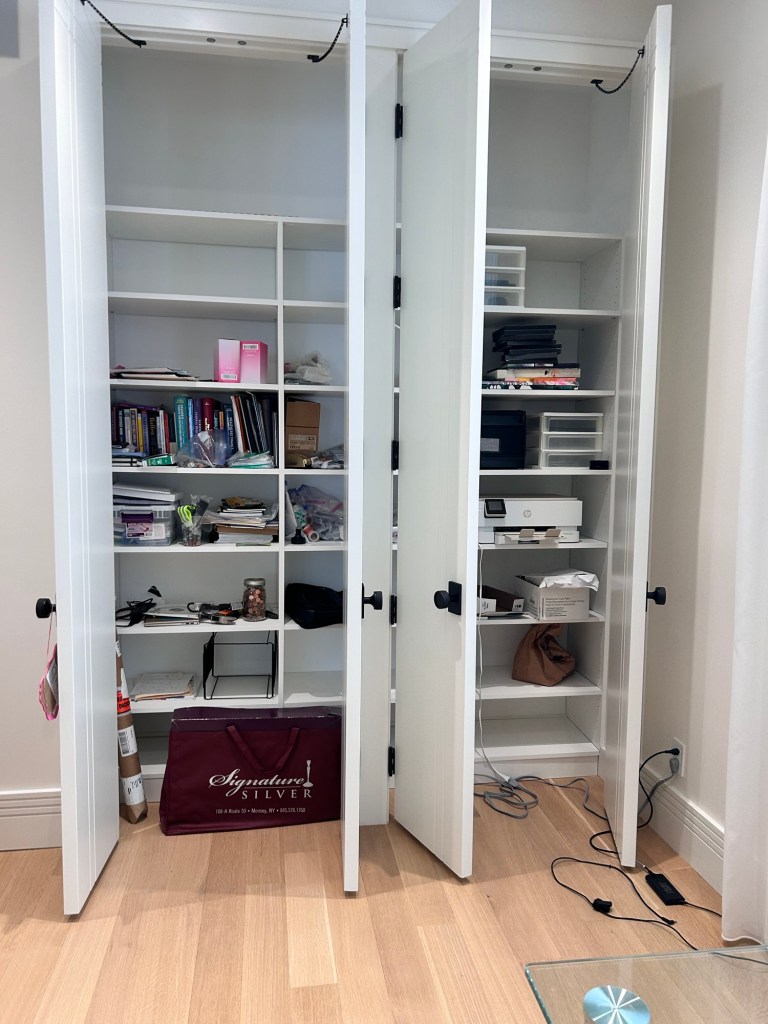
If you prefer paper – that’s totally fine. But loose piles are not a system; they’re just piles waiting to fall over.
This is where filing comes in. I like to keep it visual and intuitive, not something that requires a lot of thinking.
One of my favorite methods is using color-coded folders:
- Blue for health
- Red for bills
- Green for banking
- Yellow for school
Within each color, break things down further. Under health, each child gets their own folder. Under banking, each bank gets its own folder. Then – and this part really matters – sort everything alphabetically within each category.
That way, when you’re filing, your brain doesn’t have to work so hard. You’re not reading labels or overthinking it. You’re just thinking, “This is red. Bills go in red.”
And systems that don’t require thinking are the ones that actually get used.
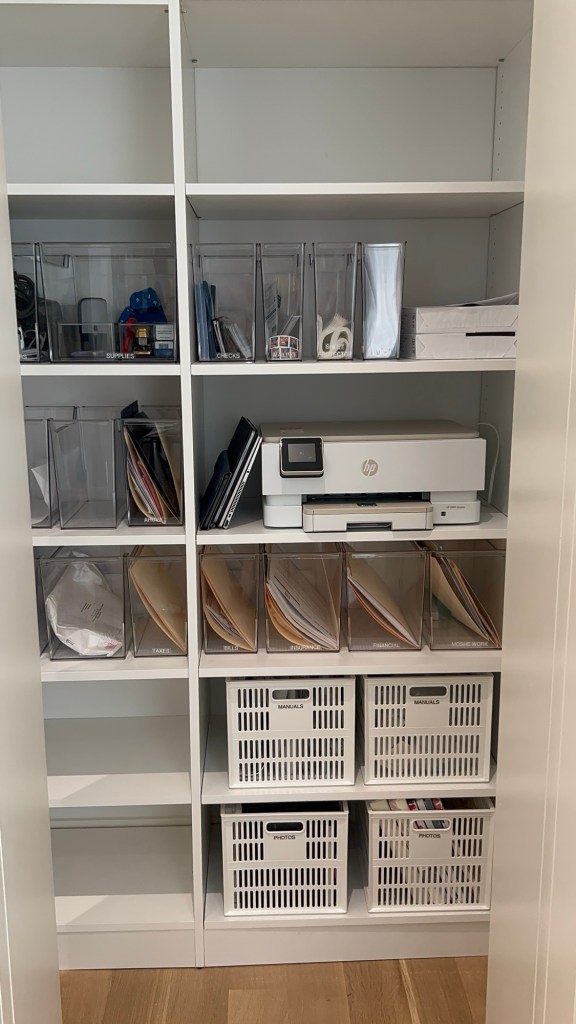
Step Four: Let’s Stop Pretending You’ll File Every Day
Let’s be honest.
You’re not filing papers every day.
I’m not filing papers every day.
And building a system that assumes you will is setting yourself up for failure.
Instead, I recommend a reality bin.
This is an open bin or tray where papers can land when life is busy. No sorting. No pressure. Just a designated place that keeps piles from spreading across your desk.
Then, once a week or every couple of weeks – whatever works best for you – you sit down and file.
Consistency matters far more than frequency.
Step Five: A Smarter Way to Handle Mail
If mail is your biggest issue, try sorting by action instead of category.
A mail sorter with labeled sections can make a huge difference:
- To Be Filed
- Bills
- Invitations
- Tzedakah
- Needs Attention
This way, when the mail comes in, you’re making one quick decision instead of ten.
And when it’s time to deal with it, you’re not hunting for papers or shuffling through piles. Everything is exactly where you expect it to be.
That alone can cut your paper stress in half.
Final thoughts
At the end of the day, paper organization isn’t about perfection.
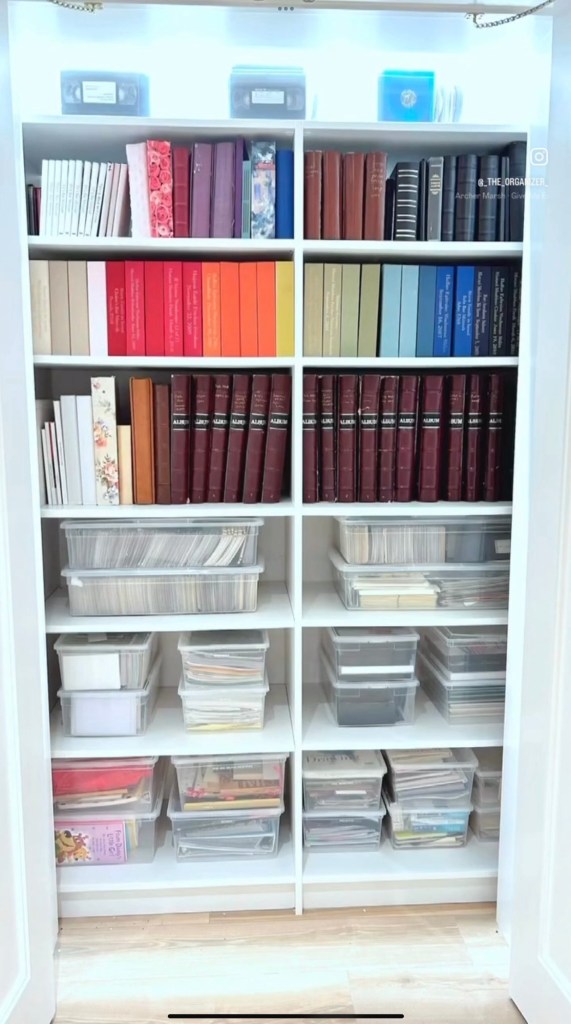
It’s about deciding what you actually need, giving it a clear home, and creating a system that’s easy enough to use in real life.
Not perfect.
Not pristine.
Just an office where you can find your pen without a calling in a search party.
You’ve got this.
Happy Organizing,
Devorah
 The Organizer
Leave a comment