Dear Devorah
I live in Lakewood and absolutely love your column. I hired a professional organizer a few years ago when we moved, and at the time everything looked amazing. But now… it doesn’t. I feel like the systems just aren’t holding up, and sometimes I wonder if I need someone to come back regularly just for maintenance. Is that normal?
- Maintenance Mystified
Dear Mystified,
Is it normal for organizing systems not to hold up?
Short answer? Yes.
Long answer? Let’s talk about why – and what actually helps systems last.
First things first: if your systems aren’t holding up, there is nothing wrong with you, nothing wrong with your family, and nothing wrong with your organizer.
The only time a house stays exactly the same after an organizer leaves is when no one lives in it. And unless your family quietly packed up and moved out without telling you, some level of mess, shifting, and reorganizing isn’t just normal – it’s expected.
Organizing isn’t about freezing your home in time. It’s about creating systems that can survive real life – homework nights, rushed mornings, grocery runs, guests, and that one drawer everyone pretends not to see.
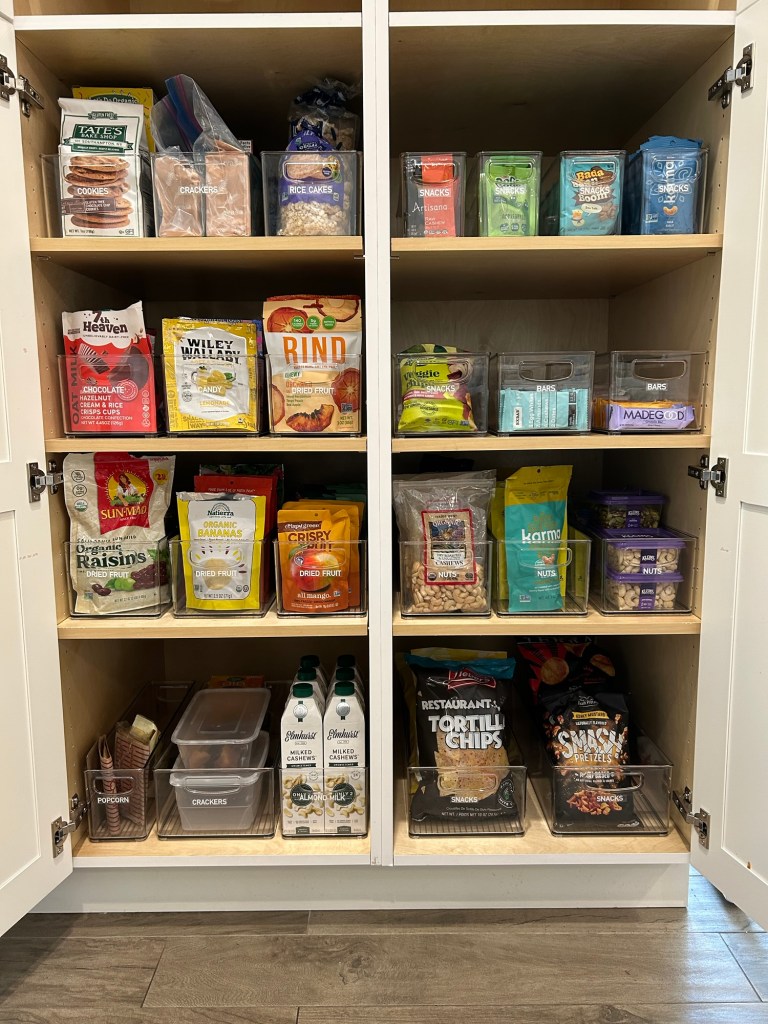
The Five Steps of Organizing (Yes, There Are Five)
Every organizing job follows the same basic flow:
- Editing (decluttering – deciding what stays and what goes)
- Sorting & categorizing (grouping like with like)
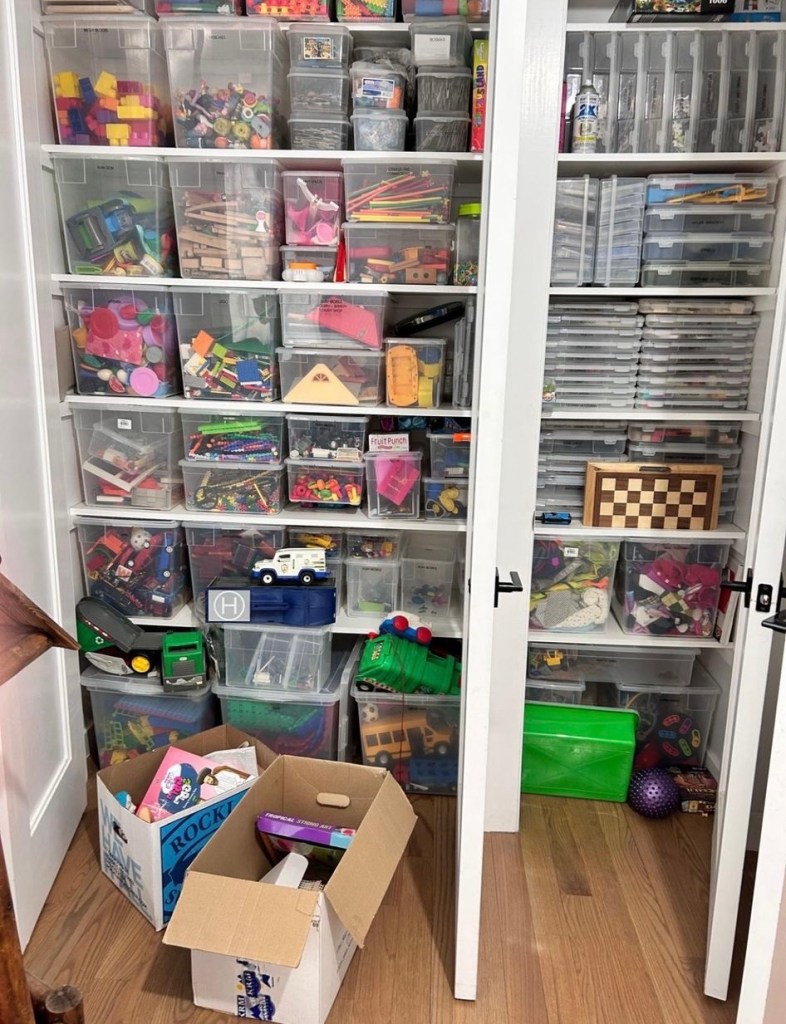
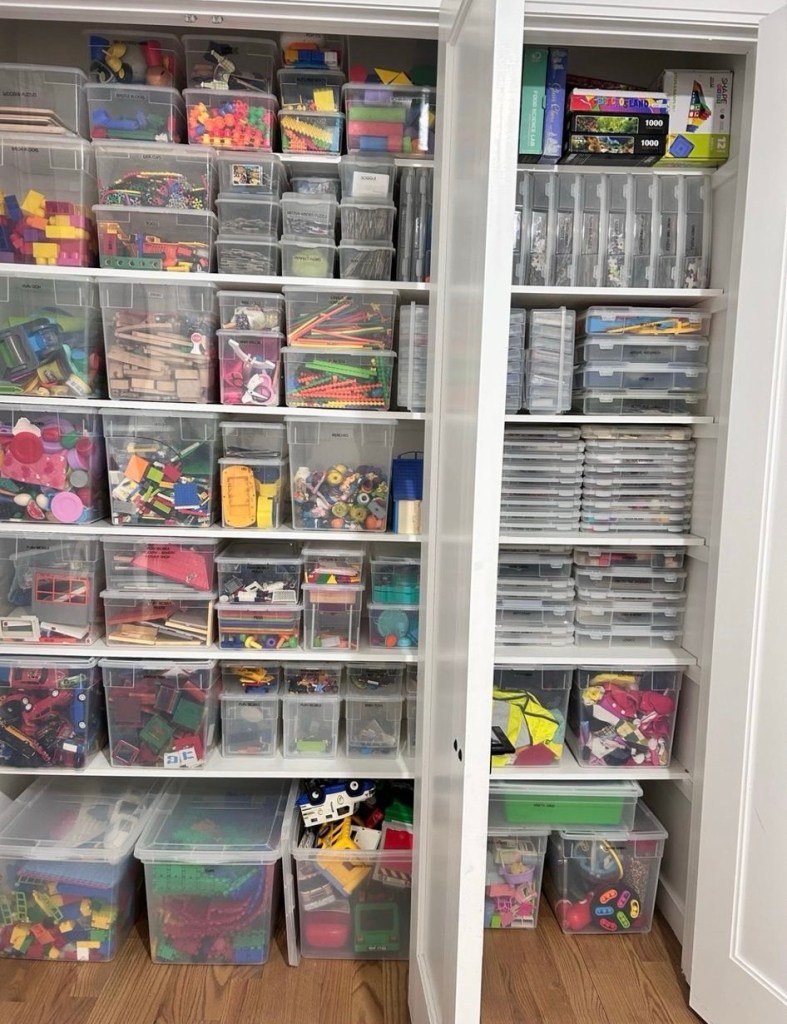
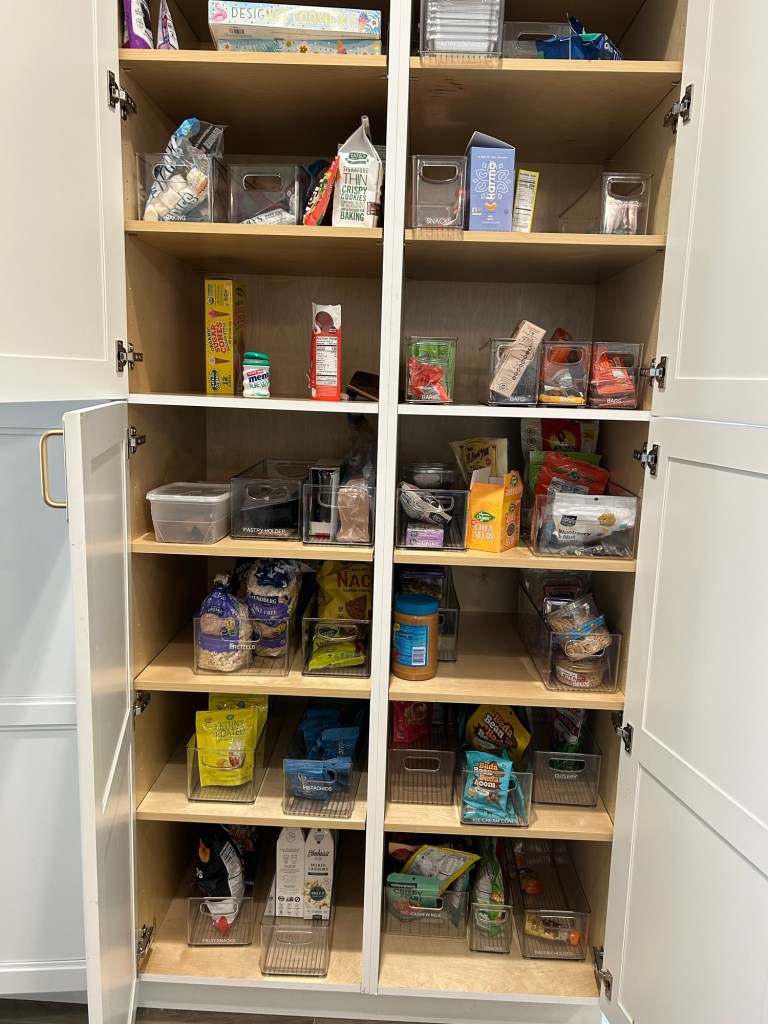
- Containing (using bins, zones, shelves and drawers)
- Labeling
- Maintenance
That last step is the one most people forget – and the one that determines whether a system actually lasts.
My goal as an organizer isn’t just to leave you with a beautiful space on day one, but to create systems you can reset again and again – on day thirty, day ninety, and day “why does this look like this again?”
Because a system that can’t be maintained in real life isn’t a good system, no matter how good it looked at the beginning.

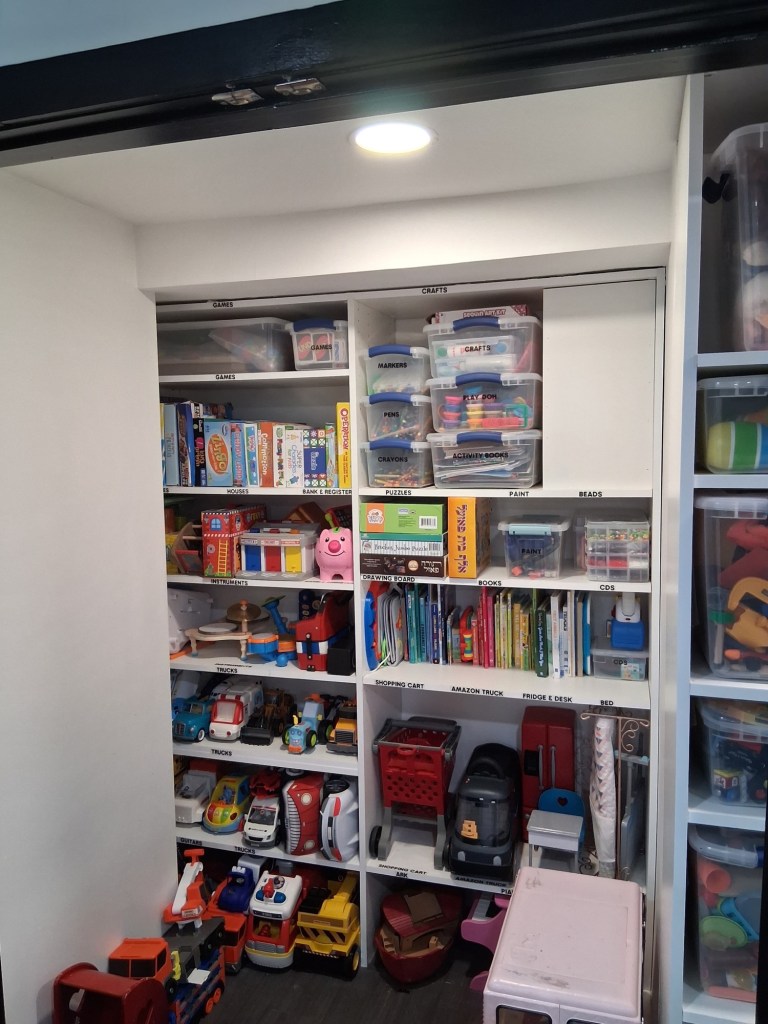
Why Systems Fall Apart (And Why It’s Normal)
Here’s something people don’t always realize: organizing is not one-size-fits-all.
If you and your neighbor had the exact same house and the exact same belongings, I would give you two completely different setups because families don’t live the same way.
Some people naturally put things back where they belong.
Some people fully intend to… and then get distracted halfway there.
Some kids love systems. Others treat bins like suggestions.
And then there’s real life – the part no system can ignore.
Pantries don’t stay static. Toys migrate. Paper has a way of multiplying on the counter, even when you just cleared it yesterday. Laundry – somehow – keeps coming back.
So when someone tells me, “My system is falling apart,” I don’t assume failure. I take a step back and ask why:
Was it too complicated to keep up with?
Was it built for an ideal version of your day instead of your real one?
Or did life simply shift?
All of that is normal.
Sometimes a system doesn’t hold up not because it’s “wrong,” but because it wasn’t designed closely enough around how your family actually lives.
Often, the Problem Is… Labels
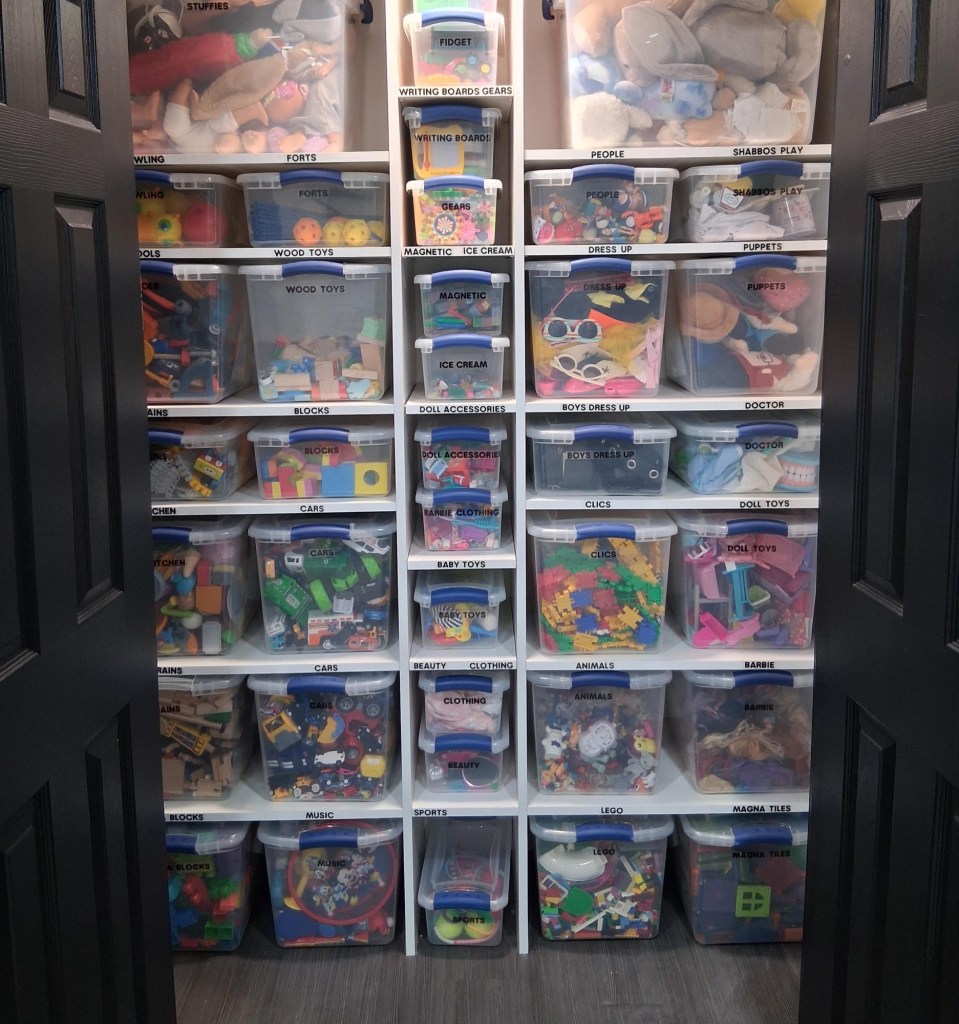
When someone tells me a system isn’t holding up, the very first thing I check is the labels.
Labels aren’t decoration. They’re instructions.
They tell everyone in the house – kids, babysitters, cleaning help, spouses – exactly how the system is meant to work.
When labels are missing, unclear, too small, or too vague, things start to drift – not because anyone is doing anything wrong, but because people are left guessing.
Sometimes the fix is as simple as clearer, bigger, more specific labels.
If That’s Not It, Look at the Containers
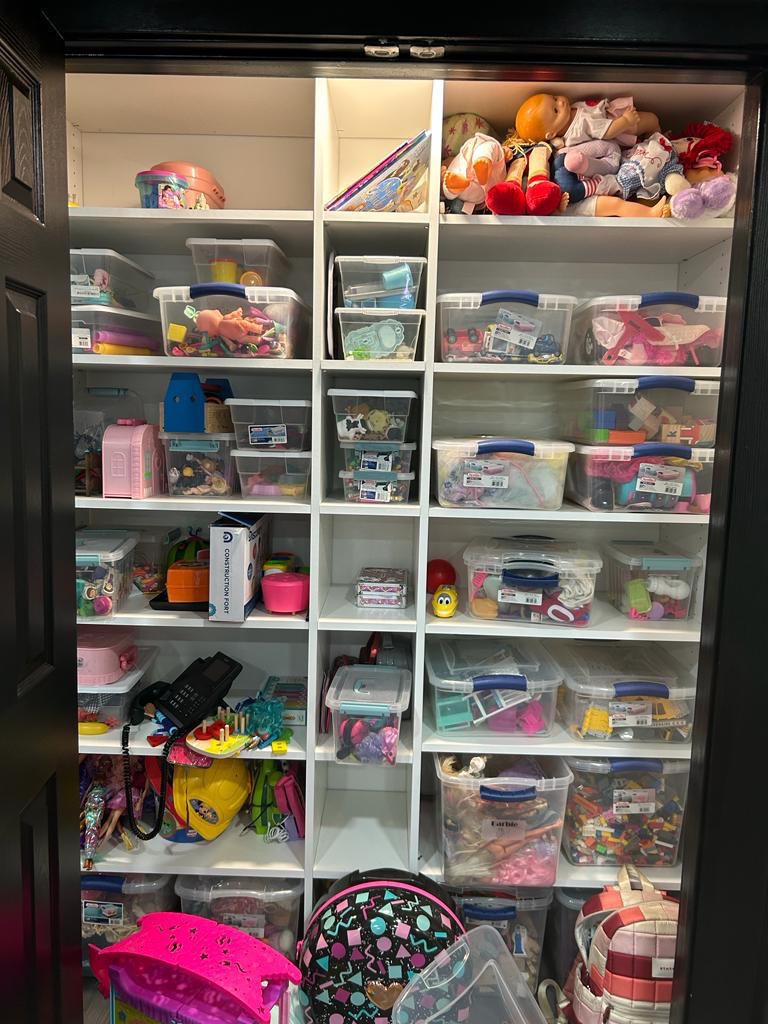
If the labels are clear and things still aren’t sticking, the next suspect is containment.
More often than not, the bins used are:
- Too small (this is the most common issue)
- Too deep to see what’s inside
- Hard to reach
- Or just not right for the category
Buying containers doesn’t automatically fix a space. Buying the right container does. One small change here can be the difference between a system you fight and one you actually use.
Maintenance Should Take Minutes – Not an Afternoon
Here’s the biggest mindset shift I give clients: maintenance only works when it’s small and scheduled.
Instead of trying to “keep everything organized,” choose one area at a time and decide what’s realistic for your life:
- Two minutes a day
- Five minutes once a week
- Ten minutes once a month
Give yourself clear limits.
“When the bin is full, I deal with it.”
“Once a week, I reset this drawer.”
That’s the system.
Two minutes done consistently is far easier than three hours every few months – the kind that usually happens right before company arrives, when you’re standing there thinking, “How did this get so bad?”
Build Systems for Real Life (Not the Version of You With Endless Time)
Maintenance only works when a system meets people where they are.
Most things don’t get put away right away. They land somewhere first – on the stairs, on the counter, in the playroom. And that’s normal.
The most successful homes make room for that pause with what I call “in-between systems.”
A basket at the bottom of the stairs.
A basket at the top.
An overflow bin for mail you’ll “definitely look through later.”
I’ve even had clients use stair-shaped baskets because, honestly, that’s just real life.
One client uses an over-the-door shoe organizer in her playroom with one rule:
“If you don’t know where it goes, put it here.” Once a week, she resets it.
That’s not lowering the bar. That’s keeping the house livable.
Final Thoughts
Needing maintenance doesn’t mean your organizing failed.
It means your home is being lived in.
Good systems aren’t the ones that stay perfect – they’re the ones that are easy to reset.
And if your house looks a little messy at the end of the day?
That usually means people ate, played, worked, and lived there.
So give yourself five minutes tomorrow. Not a full overhaul. Not a deep dive. Just five minutes.
And if it still doesn’t look perfect after that? Congratulations – you’re using your house correctly.
You got this!
Happy Organizing,
Devorah
 The Organizer
Leave a comment